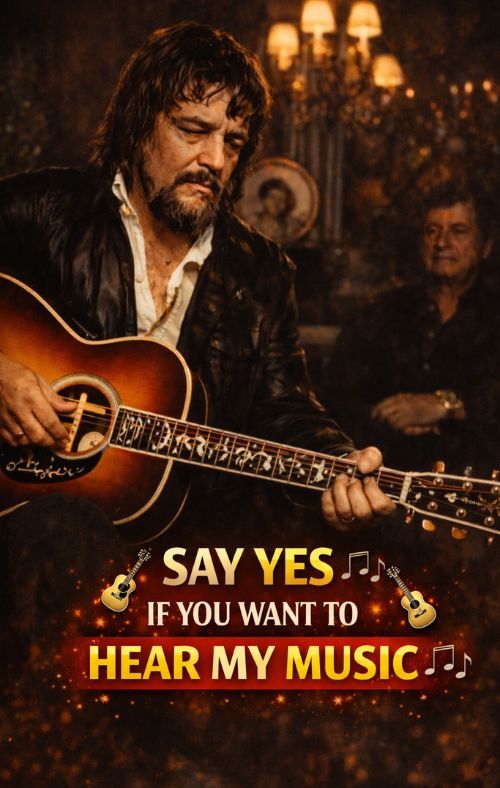
Introduction:
There are artists the world admires, and then there are artists the world recognizes. That distinction defines the enduring power of Waylon Jennings. He was never simply a figure to be applauded from afar; he became something far more intimate — a mirror in which listeners saw their own defiance, their damage, and their dignity reflected back at them.
What set Waylon apart was not just his role in shaping the outlaw country movement, but the emotional truth embedded in everything he delivered. He did not present himself as a polished ideal or a distant icon. Instead, he stood before his audience as a man who had lived — fully, imperfectly, and without apology. There was no attempt to disguise the contradictions that defined him: strength and vulnerability, pride and regret, resilience and weariness. In a world often obsessed with perfection, Waylon offered something far more valuable — authenticity.
That authenticity resonated deeply, particularly with listeners who had already come to understand that life leaves marks no one escapes. For them, dignity was never about remaining unscathed; it was about enduring without surrendering who you are. Waylon Jennings didn’t just understand that — he embodied it. He sang as if every note had been earned, not performed.

His voice carried more than melody; it carried experience. There was grit in it, certainly, but also humor, fatigue, stubbornness, and a quiet kind of sorrow. It refused to flatter. It did not offer fantasy or easy escape. Instead, it gave listeners something rarer — recognition. He didn’t romanticize pain or dress it up as something beautiful. He acknowledged it, gave it space, and in doing so, stripped it of its isolation. For those who had stumbled, endured disappointment, or simply kept going when life gave them every reason not to, his music felt less like entertainment and more like understanding.
Waylon’s greatest gift may have been the emotional permission he extended to his audience. He allowed people to admit they were bruised without feeling broken. He gave them the freedom to carry pride alongside imperfection. He showed them that the rough edges of their lives were not signs of failure, but evidence of survival. In a culture that often demands clean narratives and simple redemption arcs, his songs acknowledged something far more honest: that many lives remain complicated, unfinished, and difficult to explain — yet still worthy of respect.

This is why his following has remained so fiercely loyal across generations. Fans were not merely celebrating a musician; they were defending a truth they recognized within themselves. The outlaw image — the rebellion, the independence — was only the surface. Beneath it lay something deeper: a refusal to be reshaped for approval, a resistance to losing one’s identity, and an unflinching acceptance of life’s scars.
Waylon Jennings was never just a country star wrapped in legend. He was proof that a person could be flawed, marked by hardship, and still stand fully in their own truth. And perhaps that is the rarest form of greatness an artist can achieve — not simply to be loved, but to make others feel less alone in the realities they carry.
He sang not as an escape from life, but as a testament to it. And in doing so, he left behind more than music. He left behind a reflection — one that continues to show people not only where they’ve been hurt, but how strong they truly are.