Introduction:
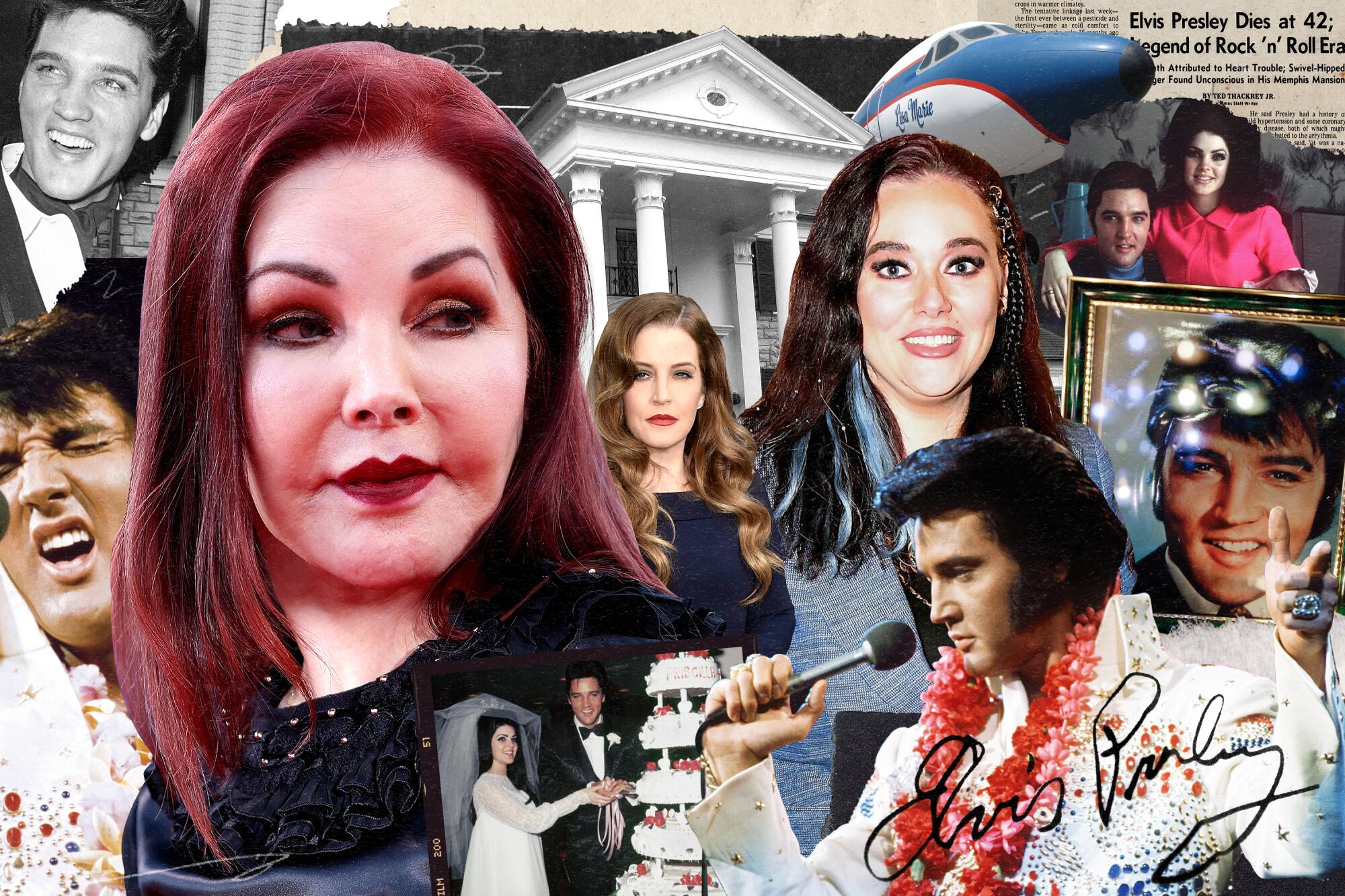
For decades, the world believed it understood Elvis Presley—the untouchable icon, the voice that defined a generation, the man frozen in a permanent glow of fame and legend. He was “The King,” larger than life, immune to the ordinary struggles that define most human stories. But behind the brilliance of sold-out arenas, the flashing cameras, and the roar of adoring fans, there existed a far more intricate and deeply human figure. And for years, that truth remained hidden—until Priscilla Presley chose to speak.
In a candid and emotionally revealing account, Priscilla made it clear that her decision to share Elvis’s story was never rooted in betrayal. Instead, it was driven by a need for clarity. In the years following his death, countless rumors, exaggerated biographies, and sensational narratives began to shape public perception. According to her, many of these accounts distorted the truth, reducing Elvis to either a flawless idol or a deeply troubled caricature. She felt a responsibility to restore balance—to present not just the legend, but the man beneath it.

What she revealed surprised many.
Behind closed doors, Elvis struggled with insecurities and internal conflicts that sharply contrasted with his public image. Their marriage, often romanticized by fans, was far more complex than it appeared. Priscilla described a relationship that evolved over time—from youthful passion into something more fragile and complicated. Communication, especially during the 1960s, was often limited. Emotional struggles were rarely voiced, and that silence gradually created distance between them.
Perhaps most startling were her reflections on Elvis’s temperament. Long-dismissed stories of his explosive anger, she confirmed, held truth. There were moments when frustration overtook him—famously, even leading him to shoot television sets in fits of rage. These were not theatrical exaggerations, but glimpses into a man overwhelmed by the pressures of global fame and his own unresolved emotions.
Yet, despite these revelations, Priscilla never portrayed him as a villain.
Instead, she emphasized something far more compelling: Elvis was human. He was neither the flawless idol many worshipped nor the deeply flawed figure some critics suggested. He was a product of his time—a man navigating emotional complexities in an era when vulnerability was rarely acknowledged, let alone understood. The struggles he faced were not signs of weakness, but reflections of a world that offered few tools for emotional expression.
What resonated most with readers was not just what she revealed, but how she revealed it. There was no bitterness in her words, no attempt to dismantle his legacy. Only a quiet, unwavering commitment to truth.
Even after their divorce, Priscilla shared that their relationship transformed in unexpected ways. In some respects, they grew closer—finding a level of honesty and communication that had eluded them during their marriage. It became a testament to the idea that love does not always vanish; sometimes, it simply evolves into something different, yet equally meaningful.
Still, her honesty was not universally welcomed. Some fans accused her of disloyalty, arguing that such revelations risked tarnishing Elvis’s image. But Priscilla remained resolute, insisting that understanding the real man behind the myth does not diminish his legacy—it deepens it.
Because in the end, the greatest revelation was not about what Elvis did or did not do.
It was the realization that Elvis Presley was never meant to be a god.
He was a man—flawed, emotional, and profoundly real.
And perhaps, that truth carries a power far greater than any legend ever could.