Introduction:
When Heartbreak Turns to Fire: The Enduring Power of Bee Gees – Tragedy
There are songs that gently pass through time… and then there are songs that seize a moment, define it, and refuse to let go. Bee Gees – Tragedy belongs firmly in the latter category. Released at the height of the group’s extraordinary late-1970s success, this electrifying track stands as a testament to the trio’s uncanny ability to blend emotional intensity with irresistible rhythm. For listeners who lived through that era—and for those who have since discovered its magic—the song remains a striking reminder of how deeply music can stir the human spirit.
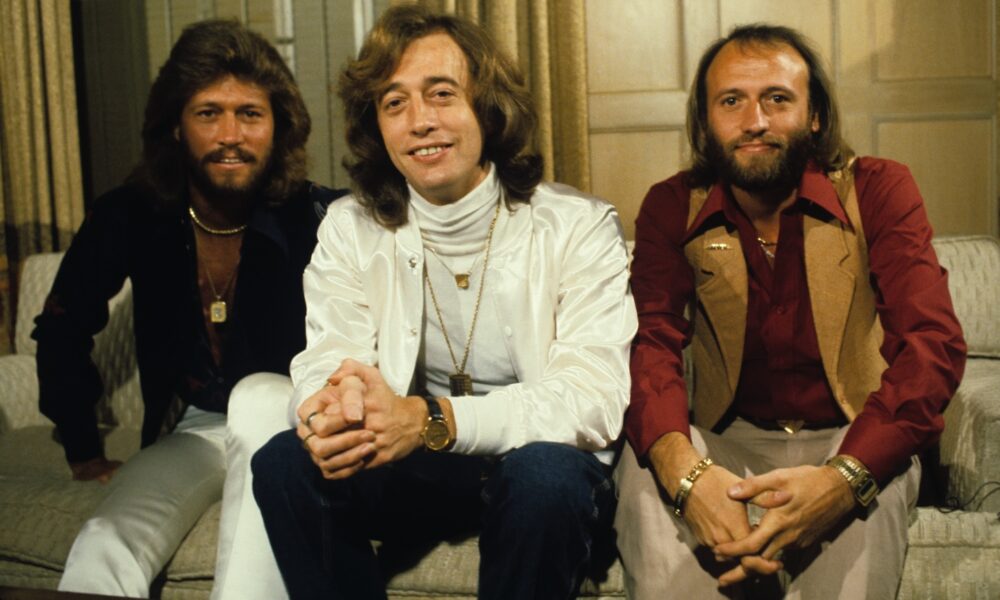
From its very first pulse, “Tragedy” wastes no time establishing its dramatic presence. A sharp, almost urgent sonic burst introduces a track that feels alive with tension and anticipation. It is not merely a song one listens to; it is a song one experiences. The Bee Gees, masters of vocal harmony, deliver a performance here that is both polished and emotionally charged. Barry Gibb’s soaring lead vocal, supported by the unmistakable harmonies of Robin and Maurice, creates a layered sound that feels both expansive and intimate.

What makes Bee Gees – Tragedy particularly compelling is its lyrical simplicity paired with emotional weight. The word “tragedy” itself becomes a refrain that echoes like a heartbeat throughout the track—persistent, unavoidable, and deeply human. It speaks to a universal feeling of loss or longing, yet it does so in a way that is accessible rather than overwhelming. This balance is part of what has allowed the song to endure across generations.
Musically, the track is a fascinating study in contrast. Beneath the urgency of its beat lies a carefully constructed arrangement, blending elements of disco with a more rock-oriented edge. The production—crisp, bold, and forward-thinking for its time—demonstrates the group’s willingness to push beyond the boundaries of genre. It is this fusion that gives the song its distinctive character: danceable, yet deeply expressive.

For seasoned listeners, there is also a sense of nostalgia woven into every note. “Tragedy” evokes a time when radio waves carried songs that could unite audiences across continents, when a single track could dominate dance floors and quiet living rooms alike. Yet even removed from its original context, the song retains its vitality. It continues to resonate because its core emotion—captured so vividly by the Bee Gees—remains timeless.
In revisiting Bee Gees – Tragedy, one is reminded not only of the group’s technical brilliance but also of their instinctive understanding of feeling. They knew how to take something as simple as a word, a melody, or a rhythm, and transform it into an experience that lingers long after the music fades. And in doing so, they created a piece that still speaks, still moves, and still matters.