
Introduction:
There are artists who define a moment, and then there are those who seem to exist beyond time itself—figures whose presence lingers not only in sound, but in the emotional memory of a nation. Dolly Parton belongs unmistakably to the latter.
Over the decades, she has become far more than a celebrated voice in country music or a prolific songwriter. She has evolved into something deeper and more enduring: a quiet constant in the lives of millions, a figure whose music does not simply entertain but accompanies, comforts, and remembers alongside her listeners. At a certain point in American cultural history, Dolly Parton ceased to be “just” a star. She became something rarer—the emotional heartbeat of an era.
What makes her legacy so remarkable is that it was never built solely on fame or spectacle. Instead, it grew organically through the deeply personal ways her songs embedded themselves into everyday life. Her music did not merely fill concert halls or climb charts; it found its way into kitchens, car rides, long nights, and quiet moments of reflection.
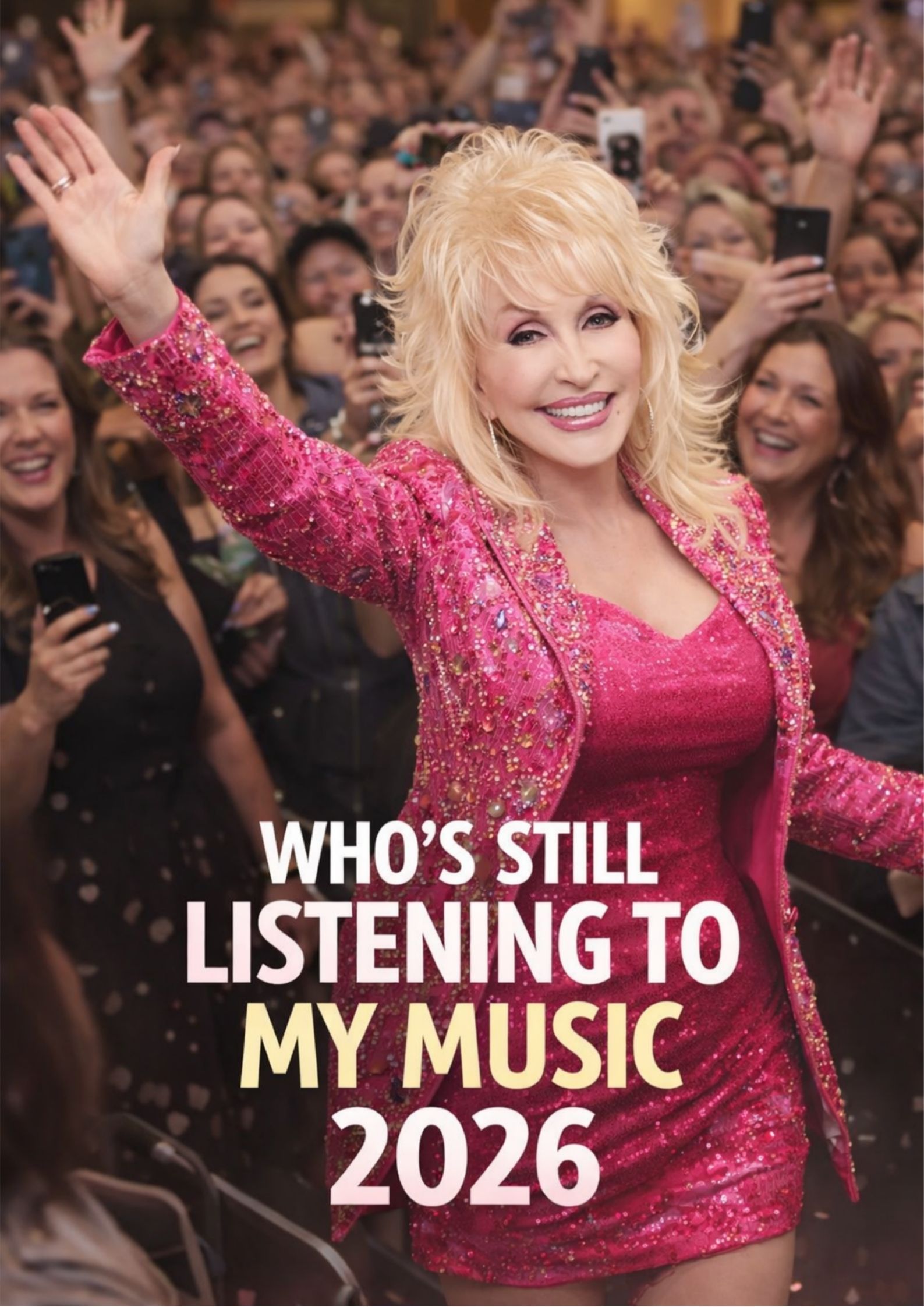
Songs like Jolene, I Will Always Love You, 9 to 5, and Coat of Many Colors are not simply enduring hits—they are emotional landmarks. For many, they unlock vivid memories: a family gathered around a worn kitchen table, a solitary drive through a summer storm, or the quiet resilience of everyday life unfolding against the odds.
Take “Jolene,” for instance. Beneath its deceptively simple melody lies a deeply human vulnerability—the fear of losing something precious. Its emotional honesty transcends generations, allowing listeners to see themselves reflected in its plea. It is not just a song about rivalry; it is a confession of insecurity that feels timeless and universal.
“I Will Always Love You” offers a different kind of depth. Often interpreted as a song of loss, its true essence lies in grace—the ability to let go without bitterness. It speaks to a mature understanding of love, one that recognizes that not all meaningful connections are meant to last forever. For many listeners, especially those who have lived through life’s inevitable separations, its message resonates with profound clarity.
Then comes “9 to 5,” a song that shifts from introspection to collective voice. With wit and energy, it captures the frustrations and aspirations of working life, particularly for women whose efforts often went unrecognized. It is both an anthem and an acknowledgment—a reminder that dignity exists even in the most routine struggles.
Yet perhaps no song reveals Dolly’s soul more tenderly than “Coat of Many Colors.” In it, she transforms hardship into beauty, turning a story of poverty into one of pride, love, and identity. It is here that she transcends performance entirely, offering something closer to emotional truth.

This is the distinction that defines her legacy. Many artists create memorable songs; very few create lasting emotional connections that become part of people’s personal histories. Dolly Parton achieved both, and in doing so, she became woven into the fabric of American life itself.
Her presence has always carried a rare balance: warmth without pretense, strength without severity, and success without distance. Beneath the glamour and unmistakable image lies a profound understanding of human experience—one that allows her to connect not as a distant icon, but as a companion through life’s joys and sorrows.
In the end, Dolly Parton became more than a star because she offered something enduring. She became memory, comfort, and a shared emotional language. And even now, decades later, her music continues to remind a generation—and those who follow—that even life’s hardest moments can be carried, and perhaps even healed, through song.