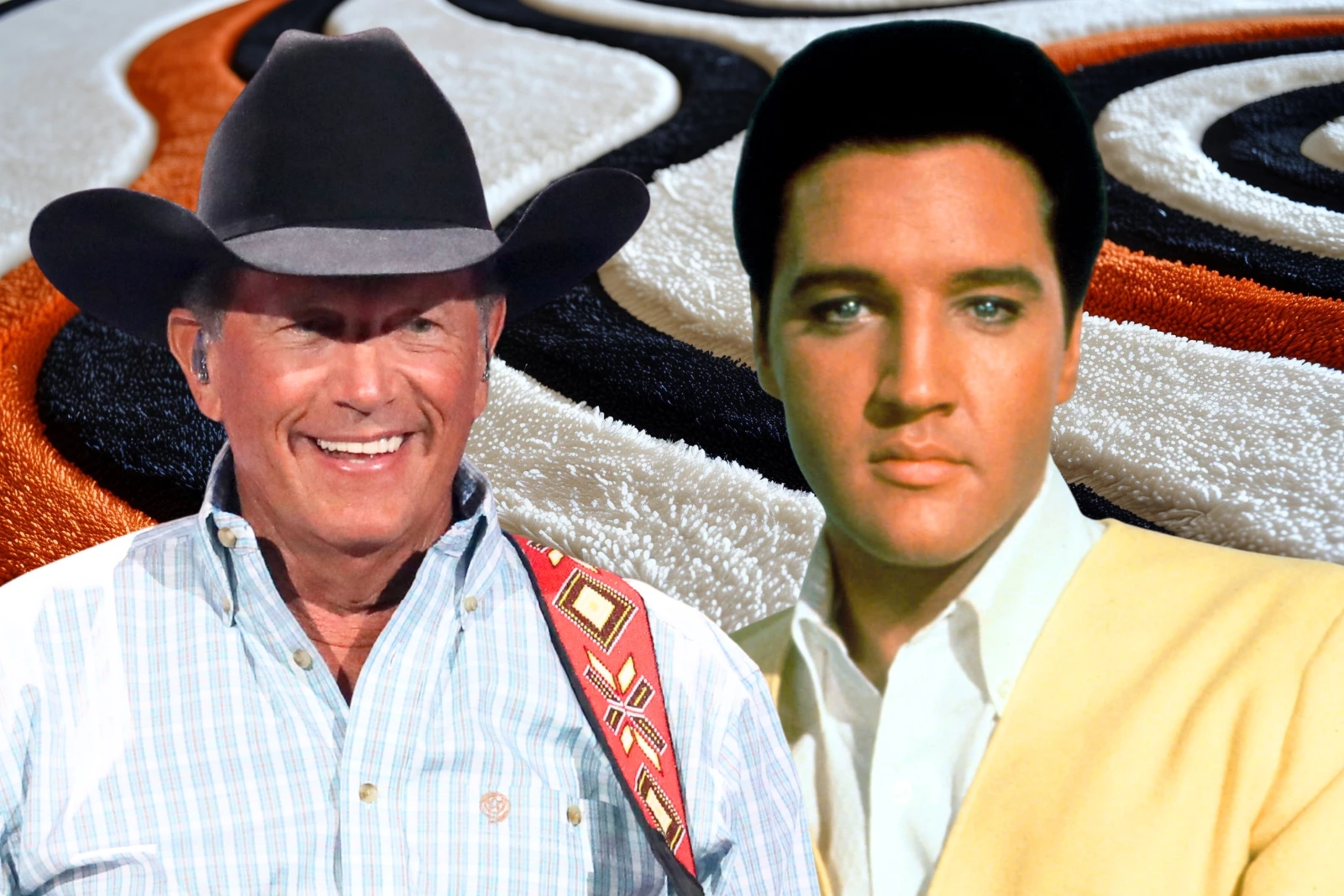
The Secret Elvis Presley–George Strait Connection That Almost No One Knows—How Colonel Tom Parker May Have Helped Shape the King of Country
When music fans talk about Elvis Presley and George Strait, they usually place them in completely different worlds. One is forever remembered as the King of Rock and Roll, while the other earned the legendary title of the King of Country. They belonged to different generations, recorded different styles of music, and built careers decades apart. But what if these two American icons shared far more than anyone ever realized?
The surprising connections between Elvis Presley and George Strait reveal a remarkable story of parallel careers, shared values, military service, legendary managers, and one fascinating Hollywood figure whose influence may have quietly linked both legends together.
At first glance, Elvis and George Strait seem impossible to compare. Elvis exploded onto the scene during the 1950s, changing popular music forever with his electrifying performances and unmistakable voice. George Strait emerged decades later, becoming the face of traditional country music during an era when Nashville was rapidly evolving. Yet neither man ever chased musical trends. Instead, both remained remarkably faithful to their roots.
Elvis never abandoned his love of gospel, blues, and country music, even after becoming the world’s biggest rock star. George Strait never felt pressured to reinvent himself with flashy pop productions. Wearing his cowboy hat and boots, he stayed true to authentic country music throughout his career, earning enormous respect from fans and fellow musicians alike.
Another striking similarity is their military service.
Elvis Presley famously served in the U.S. Army from 1958 to 1960, an experience many historians believe matured him both personally and professionally. George Strait also served in the U.S. Army years later, where he was stationed in Hawaii and performed with an Army-sponsored country band before launching his recording career. While Elvis was drafted and Strait enlisted voluntarily, both men credited military life with teaching discipline, confidence, and responsibility.
For both artists, life after military service became even more successful.
Elvis returned from Germany to begin one of the most commercially successful periods of his career, recording timeless hits while starring in dozens of Hollywood films. George Strait quickly secured a recording contract after leaving the Army and steadily built one of the greatest careers country music has ever seen.
But perhaps the most intriguing connection involves Colonel Tom Parker.
Colonel Parker is remembered as Elvis Presley’s controversial longtime manager, guiding the singer from regional sensation to worldwide superstar. Although many fans criticize Parker for limiting Elvis’s international touring and steering him toward formulaic movies, there is no denying his extraordinary promotional skills. He understood publicity, branding, and entertainment better than almost anyone of his era.
According to longtime Elvis enthusiasts and industry stories, Parker admired George Strait and believed the country singer possessed many of the same qualities that had made Elvis such a phenomenon: humility, professionalism, charisma, and an authentic connection with audiences.
While Parker never managed George Strait—that responsibility belonged to the highly respected Erv Woolsey—there are claims that Parker encouraged Hollywood producer Jerry Weintraub to see Strait’s potential on the big screen. Although the exact extent of Parker’s involvement has never been fully documented, many fans have long speculated that his enthusiasm helped reinforce the idea that Strait could successfully transition into film.
That opportunity eventually became Pure Country.
Released in 1992, the film introduced George Strait to audiences beyond traditional country music. Although critics gave the movie mixed reviews, its soundtrack became a massive commercial success and remains the best-selling album of Strait’s remarkable career. For many fans, Pure Country elevated George Strait from country superstar to mainstream American icon.
The comparison with Elvis becomes impossible to ignore.
Elvis appeared in 31 feature films, many of which received mixed critical reactions. Yet those movies dramatically expanded his audience around the globe and helped cement his place in popular culture. Whether intentional or coincidental, George Strait’s single venture into Hollywood achieved something remarkably similar by introducing him to millions of new fans.
The parallels continue.
Neither Elvis nor George Strait built their careers around controversy. Both became known for professionalism, consistency, and genuine respect for their audiences. Both generated extraordinary record sales while remaining remarkably grounded despite worldwide fame. Each became the undisputed “King” of his respective genre—not because they demanded the title, but because generations of fans bestowed it upon them.
Did George Strait consciously model himself after Elvis Presley? There is no definitive evidence proving that he did. However, like countless performers who grew up during Elvis’s reign, it would hardly be surprising if he admired the King of Rock and Roll. Many fans have noticed similarities in Strait’s calm stage presence, confident walk, and effortless charisma, although these observations remain personal interpretations rather than established fact.
Whether connected directly or simply through remarkable coincidence, Elvis Presley and George Strait represent two of the greatest success stories in American music history. Their shared commitment to authenticity, military service, legendary management, and enduring influence continues to inspire generations of artists.
Sometimes history’s most fascinating stories are not about competition—but about unexpected connections hiding in plain sight.