THE NIGHT ELVIS PRESLEY WALKED ONSTAGE AT PEARL HARBOR — AND NOBODY KNEW IT WOULD BE HIS LAST FOR EIGHT YEARS
March 25, 1961. Pearl Harbor, Hawaii.
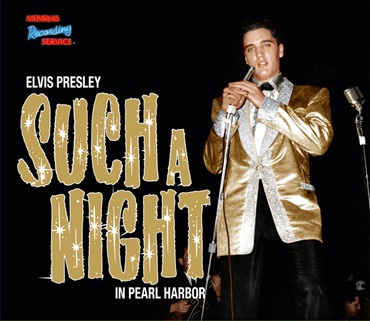
Thousands of people packed into Bloch Arena, waiting for Elvis Presley. The atmosphere was electric. The King appeared in his famous gold lamé jacket, and within moments, the screaming crowd reminded everyone why Elvis was still one of the most powerful performers in the world.
But there was something almost nobody in that arena understood.
They were watching history.
This would become Elvis Presley’s final live, non-movie stage performance for years. He didn’t announce a retirement. There was no dramatic farewell. Elvis himself could not have known that the curtain closing that night would mark the beginning of one of the longest stretches away from the concert stage in his career.
And the reason he was there had nothing to do with promoting a new record or demanding a massive paycheck.
He was there for the USS Arizona.
On December 7, 1941, the USS Arizona was devastated during the Japanese attack on Pearl Harbor. More than 1,100 sailors and Marines aboard the battleship lost their lives. For years afterward, efforts to create a permanent memorial struggled to reach their fundraising goals.
Then Elvis entered the story.
The March 25, 1961 concert was organized as a benefit to help complete the USS Arizona Memorial. The event became a spectacular success, raising more than $60,000, with commonly cited totals around $62,000. The concert also generated enormous publicity for the memorial campaign, helping push the project toward completion.
And there was an extraordinary detail behind the scenes.
Colonel Tom Parker insisted that the event be treated as a genuine benefit. Elvis would not receive his normal performance fee. In fact, the event was structured so that the proceeds could go toward the memorial rather than becoming another commercial appearance for the superstar. Parker himself was deeply involved in organizing the show.
Elvis also purchased the first $100 ticket.
The irony was impossible to miss: the man who could have commanded an enormous performance fee was instead helping sell tickets to build a memorial honoring men who had died two decades earlier.
And then Elvis stepped onto the stage.
The concert reportedly drew thousands of people, with contemporary accounts describing an overwhelming wall of screaming from the audience. Elvis performed a powerful set that included songs such as “Heartbreak Hotel,” “All Shook Up,” “Don’t Be Cruel,” “Are You Lonesome Tonight?” and “It’s Now or Never,” before finishing with “Hound Dog.”
He wore the gold jacket that had become one of his trademarks.
It would also be the final time he performed in that iconic jacket.
But the most fascinating part of the story came after the applause disappeared.
Elvis returned to Hollywood.
His career moved increasingly toward movies. Blue Hawaii, filmed around the same period, became a major commercial success. Hollywood kept the calendar full, and the concert stage gradually disappeared from Elvis’s professional life.
That silence lasted for years.
There is an important correction to one popular version of this story: Elvis did perform live in Memphis for charity on February 25, 1961, before the Hawaii concert. The Pearl Harbor show was therefore not literally his first live performance since the Army. However, it became his last live, non-movie stage performance until his famous return to the stage in 1969.
That makes the moment even more fascinating.
Imagine being inside Bloch Arena that night.
You hear thousands of people screaming.
You watch Elvis walk onto the stage.
You hear the opening notes.
You see the gold jacket.
You watch him perform “Hound Dog.”
And then he walks away.
To the people watching, it is simply the end of another Elvis Presley concert.
Nobody knows they have just witnessed the beginning of an eight-year transformation.
By 1969, the world had changed dramatically.
The Beatles had conquered America. Music had transformed. Fashion had changed. Rock ‘n’ roll had evolved. The young Elvis fans of 1961 were now older, many with families of their own.
Then Elvis returned.
On July 31, 1969, he opened his Las Vegas engagement at what was then the International Hotel. The man walking onto that stage was no longer the exact same young superstar from Pearl Harbor. He was older, more experienced, and entering a completely different era of his career.
But the electricity was still there.
And perhaps that is why the 1961 Hawaii concert remains so powerful.
It wasn’t supposed to be a farewell.
It wasn’t marketed as a historic final performance.
It wasn’t designed to become a legend.
It was simply Elvis doing something he believed mattered.
The USS Arizona Memorial was eventually dedicated on May 30, 1962. Today, the memorial stands above the sunken battleship, preserving the names of those who lost their lives in the attack.
And Elvis’s contribution became part of that story forever.
More than six decades later, the image remains extraordinary: Elvis Presley, dressed in gold, standing before thousands at Pearl Harbor, giving one of his most important performances not because it advanced his career, but because the cause mattered.
That’s what makes the night so haunting.
The audience thought they were watching Elvis.
They were.
But they were also watching the final chapter of one era of his performing career.
Elvis didn’t know it.
The fans didn’t know it.
The journalists didn’t know it.
Nobody knew that when Elvis walked off that stage, the concert Elvis would largely disappear for years.
The screams faded.
The lights went down.
Elvis returned to Hollywood.
And history moved on.
But the recording remained.
Decades later, the sound of that night still allows listeners to experience the atmosphere of Bloch Arena—the screaming fans, the band, and Elvis Presley at a pivotal moment in his career.
One night.
One stage.
One gold jacket.
One cause.
And then, almost eight years of silence.
Sometimes the most important moments in history don’t feel historic while they’re happening.