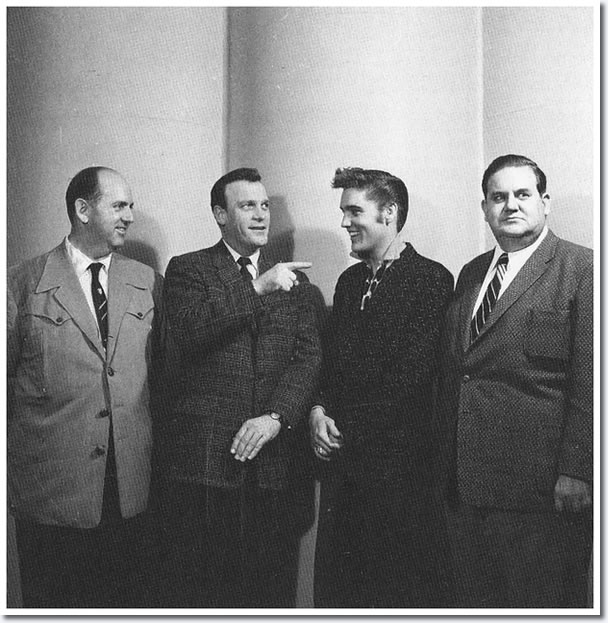
The Man Who Created Elvis Wasn’t Starting From Scratch—Colonel Tom Parker’s Forgotten Masterpiece That Changed Music Forever
History remembers Colonel Tom Parker as the mysterious mastermind behind Elvis Presley, the cigar-smoking promoter who transformed a young truck driver from Memphis into the biggest entertainment phenomenon the world had ever seen. For decades, Parker has been portrayed as a brilliant businessman, a ruthless manipulator, or both. But there is one astonishing chapter of his life that has almost disappeared from public memory—a chapter that may completely change how we understand the rise of Elvis Presley.
Long before Graceland, before the screaming fans, before Hollywood films and sold-out arenas, Parker had already been conducting an extraordinary experiment. And the subject of that experiment wasn’t Elvis.
It was a quiet country singer named Eddy Arnold.
This forgotten partnership became the blueprint for everything Parker would later accomplish with Elvis. Without it, the King of Rock and Roll might never have become the global icon we know today.
Few people realize that Parker wasn’t originally a music executive. Born Andreas Cornelis van Kuijk in the Netherlands, he arrived in America with a mysterious past, eventually reinventing himself after years working in carnivals. Those carnival grounds became his classroom. There he learned how to capture attention within seconds, create anticipation before an event even happened, and convince people they simply couldn’t afford to miss the show.
He discovered a lesson that modern marketers still teach today:
People don’t buy products first—they buy emotions.
That philosophy would shape the entertainment industry forever.
When Parker began organizing fundraising events in Florida during the early 1940s, he found himself traveling regularly to Nashville. While others searched for the best singers, Parker searched for something entirely different.
He looked for stars.
Not stars that already existed—but stars he believed he could create.
That search led him to Eddy Arnold, a humble young man from rural Tennessee with a smooth voice and enormous untapped potential. Arnold had talent, but talent alone rarely creates legends. Parker understood that success required relentless promotion, calculated publicity, strategic branding, and constant media exposure.
Weeks before Arnold even arrived in town, newspapers were already covering him.
Radio stations were talking about him.
Storefronts displayed his posters.
Local contests generated excitement.
Sponsors became involved.
By the time audiences actually saw Eddy Arnold perform, many already believed they were witnessing someone extraordinary.
That wasn’t luck.
It was Colonel Tom Parker’s marketing genius.
The results were staggering.
Arnold became one of RCA Victor’s greatest stars, eventually earning 57 consecutive Top 10 country hits, 19 No. 1 singles, and selling tens of millions of records over his remarkable career. During one incredible stretch, he spent approximately 40 weeks at No. 1 on the country charts.
These achievements established Parker as one of the most influential promoters in American music.
More importantly, they gave him something money couldn’t buy:
A proven system.
Every promotional technique Parker later used with Elvis had already been tested with Eddy Arnold.
The aggressive advertising.
The carefully crafted public image.
The endless media appearances.
The merchandising.
The strategic partnerships.
The movie opportunities.
Even Parker’s famous insistence that an artist must become an “event” rather than simply a performer first emerged during the Arnold years.
When Elvis entered Parker’s life in the mid-1950s, Parker wasn’t inventing a new strategy.
He was refining one that already worked.
That realization changes everything.
Many critics have long argued that Elvis succeeded solely because of his extraordinary talent—and there’s no question his voice, charisma, and stage presence were unlike anything America had ever seen.
But talent alone doesn’t automatically create worldwide superstardom.
Parker knew how to transform talent into a cultural phenomenon.
He understood psychology.
He understood publicity.
Most importantly, he understood human curiosity.
People wanted to attend events everyone else was talking about.
Parker made sure they were talking.
The partnership between Parker and Arnold eventually ended when Arnold felt Parker was dividing too much attention between multiple artists, particularly rising country star Hank Snow. Their professional split reportedly resulted in a substantial financial settlement, reflecting just how valuable Parker’s services had become.
Ironically, that breakup positioned Parker perfectly for his next discovery.
A young singer named Elvis Presley.
Everything Parker had learned over nearly a decade suddenly found its ultimate canvas.
The movies became bigger.
The merchandise exploded.
Television appearances multiplied.
Concert promotions reached unprecedented levels.
The marketing machine became unlike anything the music business had ever witnessed.
Whether people admire Colonel Tom Parker or criticize him, one fact remains difficult to ignore:
The Elvis Presley empire did not emerge from improvisation.
It was built upon years of experience, countless promotional experiments, and one largely forgotten partnership with Eddy Arnold that quietly rewrote the rules of American entertainment.
Perhaps that’s why this hidden chapter deserves far more attention than it has ever received.
Because the greatest story about Colonel Tom Parker isn’t simply that he discovered Elvis Presley.
It’s that he had already spent years learning exactly how to create a legend—and when Elvis finally appeared, Parker was completely ready.
Sometimes history celebrates the masterpiece while forgetting the rehearsal.
In Colonel Tom Parker’s case, that rehearsal may have changed popular music forever.