ELVIS PRESLEY’S UK VINYL LEGACY IS BEING REBUILT — THE NEW BOOK THAT COULD CHANGE HOW FANS SEE THE KING’S RECORDS
For decades, Elvis Presley collectors have treated his British vinyl releases as more than ordinary records. They are pieces of music history—each pressing, label variation, sleeve design, printing error, photograph, and release date telling another part of the story of the man who changed popular music forever.
Now, one of the most respected Elvis reference projects is being taken to an entirely new level.
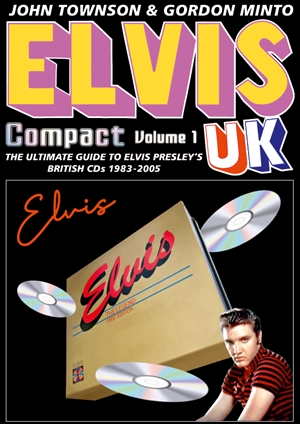
The latest development comes from the creators behind the legendary Elvis UK books, John Townson and Gordon Minto. Their original Elvis UK, first published in 1987, became a landmark reference work for collectors, documenting Elvis’s British releases from the beginning of his recording career through the following decades. It was later followed by Elvis UK 2, extending the coverage into the later period.
But according to the presentation, the authors are not simply reprinting those classic books.
They are rebuilding the vinyl LP sections from the ground up.
And that is what makes the new five-volume project so exciting.
The first volume, Elvis 33⅓ RPM Volume One: The Ultimate Guide to Elvis Presley’s British LPs 1956–1962, takes readers back to the very beginning of Elvis’s British album history—right to the explosive years when the young singer was transforming the music world.
What makes this project different is its extraordinary level of detail.
The book reportedly examines labels, pressings, label variations, tax codes, inner sleeves, recording information, photographs, artwork, printing differences, contemporary newspaper reports, reviews, and even mistakes and variations that appeared on different editions.
In other words, this isn’t simply a discography.
It becomes a historical investigation.
Take Elvis’s first British album releases. Instead of merely listing a title, release date, and catalogue number, the new volume digs into the story surrounding the record. Readers can explore how the artwork was presented, where photographs originated, how different editions differed, and what contemporary newspapers and reviewers were saying at the time.
That level of documentation gives collectors something they rarely find in a single reference source: context.
And context is everything when studying Elvis Presley.
A record manufactured in 1956 was not simply a piece of plastic sitting on a shelf. It was part of a cultural explosion. Elvis was appearing in newspapers, provoking controversy, attracting teenagers, frightening some adults, and fundamentally changing the relationship between popular music and youth culture.
Every variation of those records therefore represents another small piece of that enormous story.
One particularly fascinating feature is the attention paid to differences between British and American releases. Album covers, photographs, labels, sleeves, and other details could change depending on the market. For serious collectors, those differences can become incredibly important.
The new volume reportedly runs to approximately 462 pages, giving some indication of just how ambitious the entire project is.
And this is only Volume One.
The complete project is planned as five volumes.
That means fans could eventually have an enormous body of research covering Elvis’s British LP history in unprecedented depth.
For longtime collectors who already own the original Elvis UK books, this doesn’t necessarily make the older editions obsolete. Quite the opposite. Those books remain important landmarks in Elvis collecting history. But decades of additional research, newly examined material, improved reproduction, and the desire to present labels and artwork in greater visual detail have created an opportunity to take the project much further.
There is also something wonderfully appropriate about the timing.
Elvis’s British record history began during the earliest stage of his career, when nobody could possibly have known just how enormous his legacy would become. The first records that crossed the Atlantic were released into a world that was still discovering what Elvis represented.
Today, those same records are collector’s treasures.
And now, more than seventy years after Elvis first exploded onto the music scene, researchers are still discovering details worth documenting.
That may be the biggest surprise of all.
The Elvis story is supposedly familiar. We know the songs. We know the films. We know the famous performances. We know the iconic photographs.
But look closely at something as seemingly simple as a British LP, and an entirely different story begins to emerge.
A tiny label variation can reveal a manufacturing change. A different sleeve can reveal how Elvis was marketed in Britain. A photograph can lead to another chapter of his career. A newspaper review can reveal exactly how the public reacted to him at the time.
Suddenly, a record collection becomes a time machine.
For Elvis fans, historians, and vinyl collectors, that is precisely why this new five-volume project could become an essential reference.
And there is another important warning for collectors: these books are being produced in limited numbers.
Once a limited print run disappears, finding a copy later can become considerably more difficult.
So while the project may look at first glance like another Elvis book, it is far more ambitious than that.
It is an attempt to preserve the physical history surrounding Elvis Presley’s British recordings—before more details disappear into the past.
The King may have left the stage in 1977, but his records are still speaking.
And if John Townson and Gordon Minto’s new project delivers everything promised by the first volume, Elvis’s British vinyl story is about to become more fascinating than ever.
For anyone who believes they already know everything about Elvis Presley, this may be a reminder of one simple truth:
There are still stories hiding inside the records.