ELVIS PRESLEY’S “LOVE ME TENDER”: THE SHOCKING TRUTH BEHIND THE SONG THAT CAPTURED AMERICA’S HEART
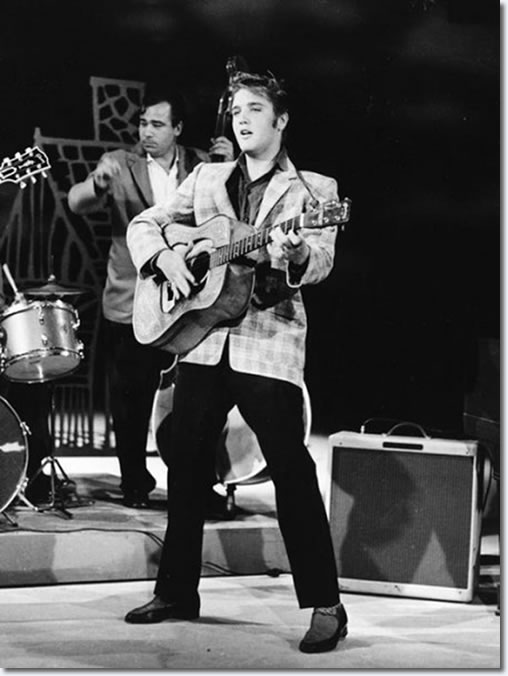
On September 9, 1956, nearly 60 million Americans sat glued to their television screens, waiting for a moment that would change music history forever. More than 80 percent of all televisions in use across the country were tuned to the same program: The Ed Sullivan Show. The reason was simple. Elvis Presley, the young rock-and-roll sensation who had already sparked controversy across America, was about to appear on television’s biggest stage.
But nobody could have predicted what happened next.
After performing “Don’t Be Cruel,” Elvis introduced a brand-new song that sounded completely different from the energetic, rebellious music that had made him famous. There was no wild performance, no provocative movements, and no attempt to shock the audience. Instead, the 21-year-old singer delivered a gentle, emotional love song called “Love Me Tender.”
The reaction was extraordinary. Within just two weeks, more than one million copies had been ordered before the record even reached stores. The song would become one of the most recognizable love songs in American music history.
Yet behind its romantic melody lies a story filled with forgotten history, Hollywood secrets, disputed songwriting credits, and a surprising connection to the American Civil War.
And the biggest twist? Elvis Presley did not actually write the song that millions of people believed belonged to him.
A MELODY BORN BEFORE ELVIS WAS EVEN A DREAM
To understand the real story of “Love Me Tender,” we must travel back nearly a century before Elvis performed it on national television.
In 1861, as America stood on the brink of the Civil War, a music publisher in Cincinnati released a song called “Aura Lee.” Its lyrics were written by William Whiteman Fosdick, while the melody was composed by George R. Poulton, an English-born musician.
The song was a sentimental ballad about a beautiful young woman with golden hair. Its gentle melody and romantic atmosphere quickly made it memorable.
Then came the Civil War.
According to historical accounts, soldiers from both sides of the conflict adopted “Aura Lee,” singing it around campfires far from home. The melody eventually found its way into military traditions, including a version known as “Army Blue,” associated with West Point cadets.
Over the following decades, the tune survived through songbooks, musical performances, and barbershop quartets. It even appeared in Hollywood productions long before Elvis Presley entered the entertainment industry.
Neither Fosdick nor Poulton could have imagined that their 19th-century composition would one day become the foundation for a worldwide rock-and-roll legend.
Both men died long before Elvis recorded the song. Their original melody, however, was about to receive a second life.
THE HOLLYWOOD DEAL THAT CHANGED EVERYTHING
By the summer of 1956, Elvis Presley was no longer just a promising singer. He was a national phenomenon, and Hollywood wanted a piece of his growing popularity.
Twentieth Century Fox was producing a Western originally titled The Reno Brothers, a drama set in the aftermath of the Civil War. Elvis was borrowed from Paramount Pictures to play Clint Reno, the youngest of four brothers.
Although Elvis was already a major star, he was not the film’s leading actor. Richard Egan and Debra Paget received top billing, while Elvis was still making his first steps into Hollywood.
But there was one important requirement: the movie needed songs.
Enter Ken Darby, the experienced vocal arranger responsible for the film’s music. Darby took the old melody of “Aura Lee” and transformed it into something entirely new. He wrote fresh lyrics that turned the Civil War-era tune into an intimate declaration of love.
On August 24, 1956, Elvis recorded the song on the Fox studio lot.
According to widely repeated accounts, Elvis was not permitted to use his regular band, including guitarist Scotty Moore and bassist Bill Black. Instead, he recorded with musicians assembled for the production.
The result was “Love Me Tender.”
But the recording session was only the beginning of a much more complicated story.
THE SONGWRITING CREDIT THAT STILL RAISES EYEBROWS
When “Love Me Tender” was released, the songwriting credits listed Elvis Presley and Vera Matson.
There was just one problem: Ken Darby had written the new lyrics, while Vera Matson was his wife. Darby later explained that he used his wife’s name because of publishing and professional arrangements.
Elvis’s songwriting credit was also connected to the commercial arrangements surrounding his music career. Such arrangements were not unusual in the music business of that era, but they have contributed to decades of confusion about who actually created the song.
Darby reportedly joked that his wife had not written the lyrics either.
Years later, Elvis was asked about his contribution. He reportedly claimed that he had written two lines but could not remember which ones.
The result is a fascinating contradiction. The face and voice that made “Love Me Tender” immortal were not necessarily the people responsible for creating its words and original melody.
This does not diminish Elvis’s performance. If anything, it highlights another part of his extraordinary talent: his ability to take existing material and transform it into something that felt deeply personal.
He did not need to compose every note to make the song his own.
SEPTEMBER 9, 1956: THE PERFORMANCE THAT SHOCKED THE INDUSTRY
When Elvis appeared on The Ed Sullivan Show on September 9, 1956, Sullivan himself was recovering from a serious automobile accident. British actor Charles Laughton stepped in to host the broadcast from New York, while Elvis performed from a CBS studio in Los Angeles during a break from filming.
The introduction itself carried a sense of occasion. Gold records were displayed as evidence of the young singer’s extraordinary success.
Elvis first performed “Don’t Be Cruel,” accompanied by the Jordanaires. Then he introduced his new song.
What followed was a different side of the performer who had become a national controversy.
Instead of the rebellious energy that had made parents nervous and teenagers obsessed, Elvis sang “Love Me Tender” with restraint and sincerity. His voice carried the melody gently, allowing the romantic lyrics to take center stage.
For a country that had spent months debating whether Elvis represented a dangerous new influence on American youth, the performance offered a surprising contrast.
He could be provocative, but he could also be tender.
The audience did not need long to respond.
Record orders flooded RCA before the single became available in stores. More than one million advance orders reportedly made the song a commercial sensation before the public could even purchase it.
When the single entered the Billboard chart at number two, it achieved a record-setting debut for the time. It subsequently reached number one and remained there for five weeks.
A melody first published in 1861 had become one of the biggest hits of 1956.
THE SONG WAS SO POWERFUL THAT HOLLYWOOD CHANGED THE MOVIE’S NAME
The success of “Love Me Tender” created an opportunity Hollywood could not ignore.
Originally called The Reno Brothers, Elvis’s film was renamed Love Me Tender to capitalize on the song’s growing popularity.
The movie opened in New York on November 15, 1956, and attracted enormous attention. Audiences came to see Elvis on the big screen, but the story waiting for them contained a heartbreaking surprise.
Clint Reno, Elvis’s character, dies during the final gunfight.
For fans who had come to celebrate their idol, the ending was difficult to accept. Reports from test screenings indicated that audiences reacted emotionally to the character’s death.
The studio responded by having Elvis record an additional verse of “Love Me Tender” to accompany the ending, allowing his voice to remain with audiences even after his character was gone.
The emotional impact extended beyond the theater.
At a Memphis screening that November, Elvis’s mother, Gladys Presley, reportedly cried when she watched her son die on screen.
According to accounts of Elvis’s career, the experience contributed to his insistence that his characters should not die on screen again.
It was a remarkable example of how deeply his screen image, family relationships, and fans’ expectations had become intertwined.
HOW “LOVE ME TENDER” FOLLOWED ELVIS FOR THE REST OF HIS LIFE
The song did not disappear after the excitement of 1956 faded.
During the 1970s, “Love Me Tender” became a memorable moment in Elvis’s live performances. He often sang portions of it while moving along the edge of the stage, interacting with fans and exchanging affectionate gestures with people in the front rows.
The performance became more than a musical number. It was an intimate ritual between Elvis and his audience.
Even in enormous venues, he could make the song feel as though he were singing directly to one person.
He also revisited the old melody in later recording projects. The tune associated with “Aura Lee” continued to echo through his career, demonstrating how a piece of music could cross generations and acquire entirely new meanings.
Yet Elvis was not always satisfied with his early Hollywood experience. He later expressed regret about aspects of his first film and the formula that subsequent movies followed, particularly the expectation that his films would contain songs regardless of whether they advanced the story.
Still, “Love Me Tender” remained one of the defining recordings of his career.
THE FINAL TWIST: WHO REALLY OWNS THE LEGEND?
The story of “Love Me Tender” is not simply the story of Elvis Presley singing a beautiful love song.
It is the story of a melody composed in the 19th century, a poem written by a forgotten name, a Civil War tradition, a Hollywood arranger who reshaped an old tune, a disputed songwriting credit, and a young singer who transformed the result into a cultural phenomenon.
The movie changed its title because of the song. The record became a sensation before it reached stores. And a melody that had survived war, changing musical tastes, and nearly a century of history suddenly belonged to a new generation.
On September 9, 1956, nearly 60 million Americans did not tune in to investigate songwriting credits or uncover the history of a forgotten Civil War ballad.
They heard Elvis Presley sing.
They heard a young man who had spent the summer challenging America’s musical traditions deliver a song filled with vulnerability and warmth.
And they believed him.
Perhaps that is the greatest mystery of “Love Me Tender.” Its melody was old, its creative history was complicated, and the names printed on the record did not tell the whole story. Yet when Elvis opened his mouth, the song became something that belonged to him in the hearts of millions.
The real story is stranger than the legend—but the legend would never have existed without Elvis.
So, what do you think? Should Elvis Presley receive the songwriting recognition associated with a song he made famous, even though Ken Darby wrote its lyrics and George Poulton composed the original melody? Or should the history behind the recording change how we remember one of Elvis’s most iconic performances?