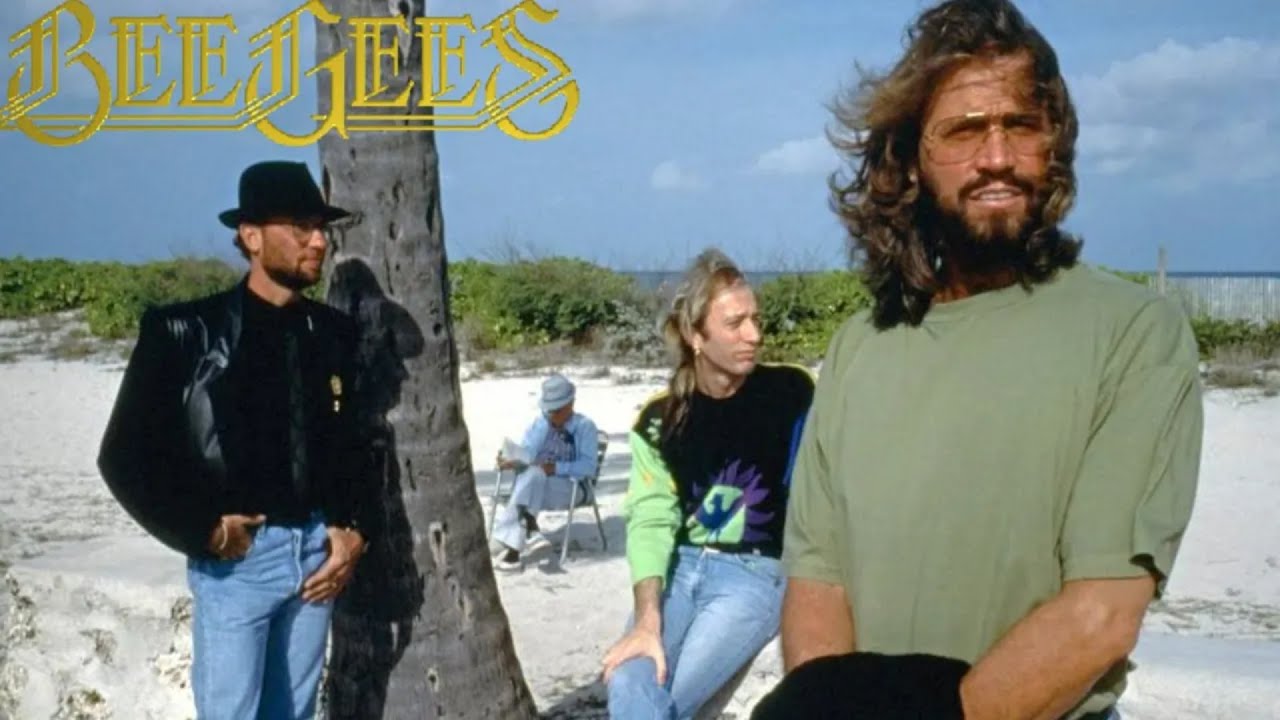
Introduction:
When Silence Speaks Louder Than Words: The Haunting Power of For Whom The Bell Tolls by the Bee Gees
There are songs that entertain for a moment, and then there are songs that linger—quietly, persistently—long after the final note has faded. Bee Gees – For Whom The Bell Tolls belongs firmly to the latter. Performed by the legendary Bee Gees, this track stands as a poignant reminder of the group’s ability to evolve while still preserving the emotional core that defined their greatest works.
Released during a later chapter in their career, For Whom The Bell Tolls is not driven by the disco pulse that once made the Bee Gees global icons. Instead, it embraces a more reflective, almost solemn tone. It is a song that feels lived-in, shaped by time, experience, and the quiet weight of memory. From the very first lines, listeners are drawn into a narrative that speaks of regret, lost chances, and the irreversible passage of time.

What makes Bee Gees – For Whom The Bell Tolls particularly compelling is its restraint. There is no need for grand gestures or overwhelming arrangements. The melody unfolds gently, allowing the lyrics to take center stage. Barry Gibb’s vocal delivery carries a sense of maturity and vulnerability that cannot be manufactured—it can only be earned through years of storytelling and personal reflection. His voice does not demand attention; it invites it.
The song’s title itself evokes a sense of inevitability, echoing themes that have resonated through literature and music for generations. Yet, the Bee Gees interpret it in a deeply personal way. This is not a grand philosophical statement about life and death, but rather an intimate confession—one that many listeners may find uncomfortably familiar. It speaks to those moments when we realize too late the value of something we once took for granted.
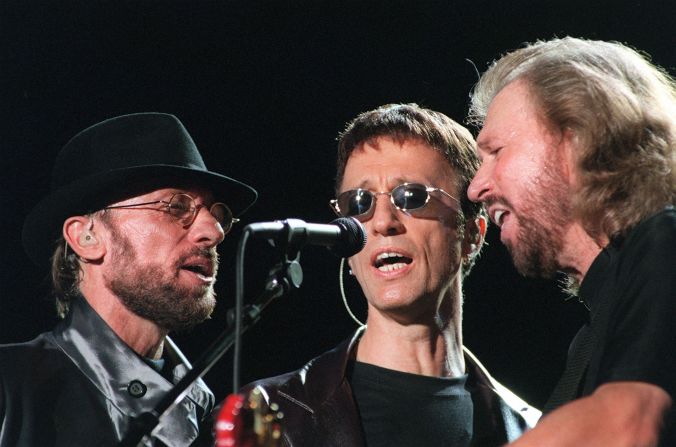
Musically, the arrangement is understated but deliberate. Soft instrumentation supports the vocal line without overshadowing it, creating an atmosphere that feels almost reflective, like looking through old photographs. Each note seems carefully placed, as though removing any one element would disturb the fragile balance of the piece.
For longtime fans of the Bee Gees, this song represents a different kind of brilliance. It is not about chart-topping energy or cultural dominance—it is about depth. It shows a group unafraid to slow down, to look inward, and to share something profoundly human with their audience.
In the end, Bee Gees – For Whom The Bell Tolls is more than just a song. It is a quiet conversation between the past and the present, between what was and what can never be again. And perhaps that is why it continues to resonate—because in its gentle sorrow, it reminds us of the importance of listening, of feeling, and of never letting the most meaningful moments slip by unnoticed.