Introduction:
Before the Farewell, He Gave Them Their Youth Back
There are artists who walk onstage determined to impress. They open with fireworks, volume, and the kind of spectacle designed to seize attention in an instant. And then there are artists like George Strait, who understand something far more enduring: if you truly want to move a crowd, you don’t begin with noise—you begin with memory.
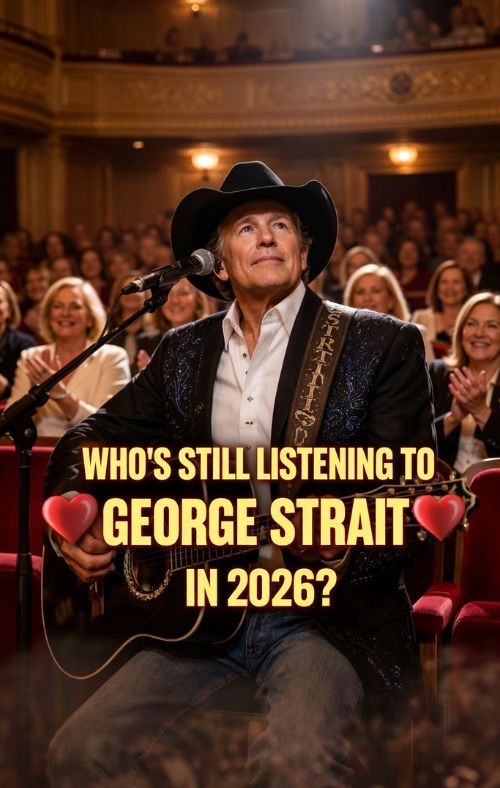
That quiet wisdom defined the final night of The Cowboy Rides Away Tour. It was not just another concert, and it was never meant to be. It was the closing chapter of a career that had shaped generations of country music listeners. Yet instead of opening with a thunderous hit or a commanding anthem, Strait chose something softer, something deeply personal. He began with Check Yes or No—and in doing so, he unlocked something far greater than applause. He unlocked a lifetime of memories.

The choice was as intentional as it was profound. “Check Yes or No” is not merely a beloved song in Strait’s catalog; it is a story of innocence. It speaks of young love before life grows complicated—before heartbreak, before distance, before the weight of time. A folded note passed in a classroom. A simple question. A quiet answer that somehow changes everything. These are the moments that often seem small in real time, yet become monumental in memory. Strait has always had a rare ability to recognize that truth and give it a voice.
On this final night, that emotional resonance carried even greater weight. The audience of over 100,000 people did not arrive as passive spectators. They came with history—decades of songs tied to their own lives. They came with gratitude, with nostalgia, and with the quiet understanding that this era was coming to an end. But instead of confronting that ending immediately, Strait offered them something gentler. He gave them the beginning.
In that moment, the stadium transformed. It was no longer just a venue filled with fans; it became something more intimate, more human—a shared scrapbook of memory. For many in the crowd, especially those who had grown older alongside his music, the opening notes were not just familiar—they were transporting. They carried listeners back to school days, to first crushes, to the vulnerability and wonder of feeling something for the very first time.

This is the quiet genius of George Strait. He has never relied on excess or spectacle to define his artistry. Instead, he has always trusted the emotional depth of ordinary life. His songs do not demand attention; they invite recognition. They remind listeners that the smallest moments—the ones easily overlooked—are often the ones that endure the longest.
And that is why the opening of that final show felt so significant. It was not simply a clever setlist decision. It was symbolic. Before the farewell, before the weight of “The Cowboy Rides Away” could settle over the night, Strait reminded his audience why any of it mattered in the first place. He brought them back to where it all began—not just for him, but for them.
Because in the end, goodbye only carries meaning when something beautiful came before it.
As “Check Yes or No” drifted into the night air, it did more than please a crowd. It returned them to innocence. It reawakened something warm and deeply human. And for a fleeting, unforgettable moment, time itself seemed to stand still—wearing a cowboy hat, carrying an old melody, and asking 104,000 people to remember who they used to be.