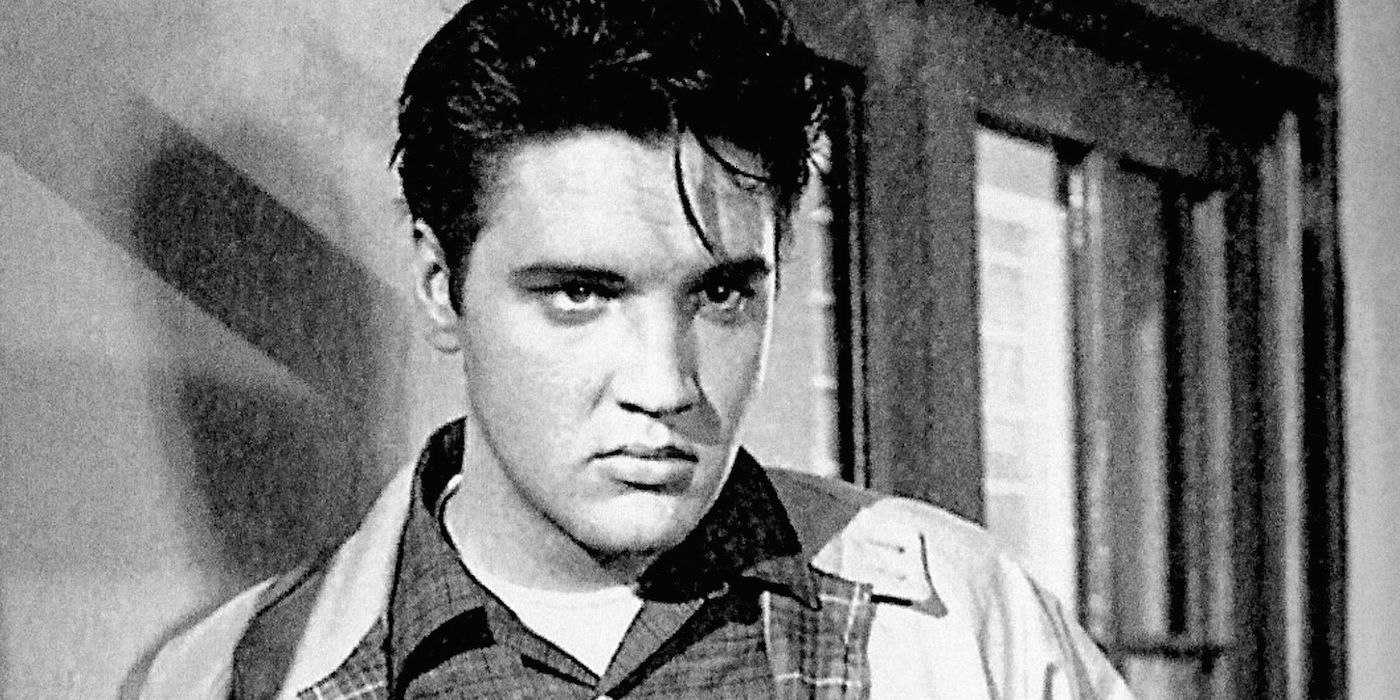
ELVIS PRESLEY LOST THE ROLES THAT COULD HAVE CHANGED HIS LIFE FOREVER – THE SHOCKING HOLLYWOOD DREAMS THAT NEVER CAME TRUE!
He conquered the world with his music. He became one of the biggest movie stars of his generation. But behind the millions of records sold, the screaming fans, and the glittering Hollywood premieres was a heartbreaking truth: Elvis Presley wanted to become a serious actor, yet some of the most extraordinary opportunities of his career slipped away before audiences ever had the chance to see what he could truly do.
And the man standing at the center of many of those missed opportunities was none other than Colonel Tom Parker, the manager who controlled so much of Elvis’s professional life.
Elvis made 31 feature films. His face appeared on movie posters around the world, his soundtracks sold millions of records, and studios knew his name could attract audiences. But success at the box office did not necessarily mean artistic fulfillment.
Behind the scenes, Elvis reportedly dreamed of something much bigger.
He admired dramatic actors such as James Dean and Marlon Brando. He wanted challenging characters, powerful stories, and roles that would allow him to prove he was more than a handsome singer with a guitar.
Yet Hollywood repeatedly offered him opportunities that never became reality.
THE FIRST SHOCK: ELVIS COULD HAVE STARRED WITH SIDNEY POITIER
In 1958, Elvis was reportedly interested in playing John “Joker” Jackson in The Defiant Ones, opposite Sidney Poitier.
The film told the powerful story of two escaped prisoners, one Black and one white, chained together and forced to depend on each other despite their racial differences.
Imagine Elvis sharing the screen with Poitier in such a groundbreaking drama!
Instead, the role went to Tony Curtis. Both Curtis and the film received Academy Award nominations.
According to accounts of Elvis’s Hollywood career, Colonel Parker rejected the opportunity on his behalf.
It could have been one of the earliest chances for Elvis to break away from the predictable musical roles that would later define much of his movie career.
ELIZABETH TAYLOR AND THE ROLE THAT WENT TO PAUL NEWMAN
The missed opportunities did not stop there.
Elvis was reportedly offered the role of Brick Pollitt in Cat on a Hot Tin Roof, the celebrated Tennessee Williams drama starring Elizabeth Taylor.
The film explored family conflict, buried secrets, emotional pain, and a troubled marriage.
Paul Newman eventually played Brick, delivering a performance that became one of the defining roles of his career.
Elvis was also approached about playing Chance Wayne in Sweet Bird of Youth, another Tennessee Williams adaptation.
Once again, Paul Newman ultimately received the role.
These were not ordinary Hollywood opportunities. They were the kinds of dramatic performances that could have changed the way critics and audiences viewed Elvis as an actor.
But the public never got to see him take those chances.
WEST SIDE STORY: ANOTHER DREAM THAT NEVER MATERIALIZED
Elvis’s name was also associated with West Side Story, the legendary musical that eventually won ten Academy Awards.
He was rumored to have been considered for the lead role of Tony.
However, the exact circumstances remain uncertain, and there is no conclusive evidence that a formal offer was made and rejected.
Still, the possibility raises an intriguing question.
What would one of the world’s most recognizable musical performers have brought to a film that became one of the greatest screen musicals in American cinema?
Instead, Elvis continued appearing in commercially successful movies that increasingly followed familiar formulas.
MIDNIGHT COWBOY: THE STORY THAT NEEDS A CLOSER LOOK
Perhaps no missed opportunity has generated more discussion than Midnight Cowboy.
The 1969 film became a landmark of American cinema, eventually winning three Academy Awards, including Best Picture.
Over the years, stories circulated that Elvis had been considered for Joe Buck, the young Texan who travels to New York dreaming of becoming successful.
Some accounts claimed that Colonel Parker rejected the possibility because of the character’s controversial image.
However, the casting history is disputed. Other historical accounts identify different actors as serious candidates for the role, and there is insufficient evidence to present Elvis as having received a confirmed formal offer.
What is certain is that Midnight Cowboy became a major cinematic achievement, while Elvis’s Hollywood career continued along a very different path.
A STAR IS BORN: THE OPPORTUNITY ELVIS REPORTEDLY REGRETTED MOST
Then came one of the most fascinating chapters of all.
In the mid-1970s, Barbra Streisand and her production team explored the possibility of casting Elvis in the 1976 remake of A Star Is Born.
The role was John Norman Howard, a troubled rock musician whose fame and personal struggles were destroying his life.
It was almost impossible to imagine a more emotionally relevant character for Elvis.
He understood the pressures of celebrity. He knew what it meant to live under the expectations of millions of fans. And he had spent years trying to balance his public image with his private ambitions.
According to later accounts from Priscilla Presley, Elvis genuinely wanted the opportunity and regretted not getting the role.
But negotiations involving Colonel Parker reportedly became a major obstacle.
There were disagreements over financial arrangements, control, and the conditions under which Elvis would participate. The agreement never came together.
The role eventually went to Kris Kristofferson.
Think about the irony: a story about a famous musician struggling beneath the weight of his own success was made without one of the most famous musicians in the world.
And according to those close to Elvis, he believed he could have done something special with that character.
THE WORLD TOUR THAT MILLIONS OF FANS NEVER GOT TO SEE
But Hollywood was not the only place where Elvis’s ambitions appeared to remain unfulfilled.
Although Elvis performed in Canada in 1957, giving concerts in Toronto, Ottawa, and Vancouver, he never undertook a major concert tour outside North America.
Fans in Britain, Japan, Australia, and countless other countries dreamed of seeing the King perform live.
Why did those international tours never happen?
Colonel Parker’s unusual immigration status and lack of a United States passport are frequently cited as possible reasons for his reluctance to travel internationally. Some accounts suggest that leaving the country could have created serious problems for Parker’s ability to return.
However, the full explanation remains debated.
Questions about security, professional control, Elvis’s personal circumstances, and the practical challenges of international touring may also have played a role.
Whatever the precise reasons, the result was extraordinary: millions of international fans never had the opportunity to experience an Elvis Presley concert in person.
AUGUST 16, 1977: THE FINAL TOUR THAT NEVER HAPPENED
By the summer of 1977, Elvis was still performing and preparing for another series of concerts.
His upcoming schedule included performances in Portland, Maine, on August 17 and 18.
Fans had purchased tickets. Venues were preparing. The King was expected to continue performing before the audiences who had supported him for more than two decades.
But on August 16, 1977, Elvis Presley died at Graceland.
He was only 42 years old.
The scheduled concerts were canceled.
Those unused tickets became painful reminders of a future that would never arrive.
The man who had electrified generations of audiences would never again walk onto a concert stage.
THE REAL TRAGEDY BEHIND THE KING’S SUCCESS
Elvis Presley achieved something almost impossible.
He became a global musical phenomenon, made 31 feature films, transformed popular culture, and established a legacy that continues to influence artists decades after his death.
But the story of his Hollywood ambitions reveals another side of the King.
He was not simply a performer satisfied with fame and money. He reportedly wanted artistic recognition. He wanted to explore difficult characters, work with respected filmmakers, and demonstrate that his abilities extended far beyond singing.
Colonel Tom Parker helped build an extraordinary entertainment empire around Elvis. But his management decisions also became a source of frustration, particularly when it came to the singer’s desire for more challenging film roles.
Not every opportunity would necessarily have produced a masterpiece. Not every rumored offer was a confirmed contract. And history cannot tell us whether Elvis would have won awards or transformed Hollywood if he had taken different paths.
But one thing is undeniable: the world never got to witness the full range of possibilities that might have existed for him.
Perhaps Elvis could have delivered a dramatic performance alongside Elizabeth Taylor. Perhaps he could have explored the emotional darkness of a character like John Norman Howard in A Star Is Born.
Perhaps he could have become a very different kind of Hollywood legend.
The King conquered music. He conquered the stage. He conquered the hearts of millions. But somewhere behind the Hollywood contracts, rejected opportunities, and decisions made on his behalf was an artist who wanted to prove there was so much more to him.
And the most heartbreaking part?
We will never know just how great Elvis Presley could have become as an actor, because some of the roles that might have revealed his true potential never made it to the screen.