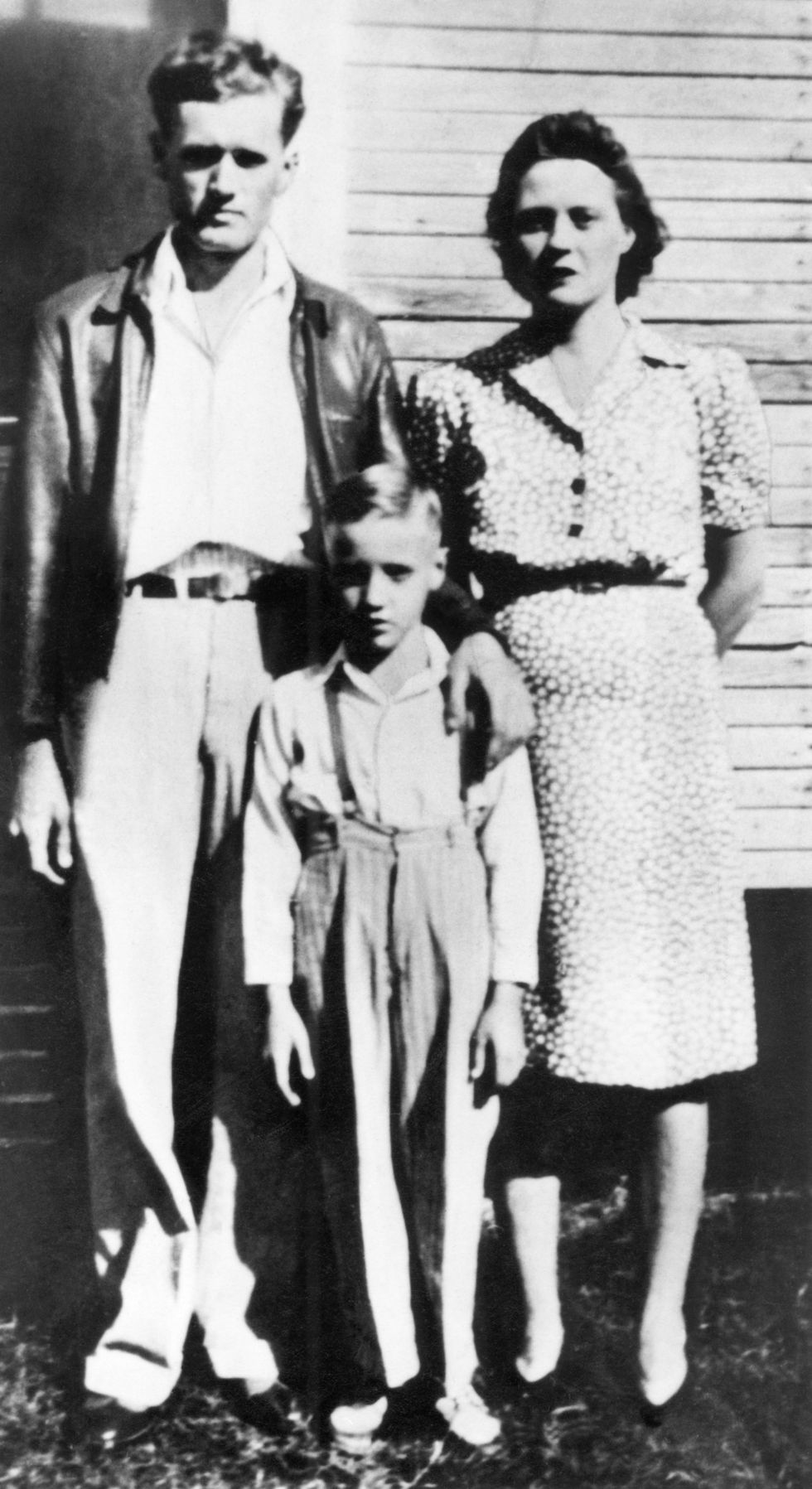
DID ELVIS PRESLEY EVER WATCH MICKEY MOUSE? The Forgotten 1929 Cartoon That Opens a Fascinating Window Into the King’s Childhood!
Before Elvis Presley conquered the world with his voice, electrifying performances, and unforgettable stage presence, he was just a young boy growing up in Tupelo, Mississippi. But what if a forgotten Mickey Mouse cartoon from 1929 could help us imagine the entertainment world that surrounded the future King of Rock and Roll? The possibility is fascinating—but the truth may be more surprising than the mystery itself!
Today, we are traveling back nearly a century to explore an intriguing connection between two icons of American popular culture: Elvis Presley, the man who transformed popular music, and Mickey Mouse, the animated character who helped change the history of cinema.
At the center of this story is The Karnival Kid, a Mickey Mouse cartoon released in 1929 during the early years of Walt Disney’s animation revolution. Could this vintage short have appeared on a theater screen in front of a young Elvis? It is a question that sparks the imagination. However, there is one important detail that fans need to understand: there is currently no reliable evidence confirming that Elvis personally watched this particular cartoon.
So why does this story deserve attention? To understand the mystery, we must first return to the world in which Elvis grew up.
A HUMBLE BEGINNING: THE BOY WHO DREAMED BEYOND HIS SURROUNDINGS
Long before the rhinestone jumpsuits, sold-out concerts, and screaming crowds, Elvis Presley experienced a childhood shaped by modest circumstances and his family’s financial struggles.
Born in Tupelo, Mississippi, in 1935, Elvis grew up in a world very different from the glamorous life he would eventually lead. His family did not enjoy the wealth and luxury that later became associated with his name. Like countless children of his generation, he discovered entertainment through the movies, music, and popular culture available in his community.
For a young boy with a powerful imagination, a trip to the movies could offer something extraordinary: a chance to escape everyday worries and enter a completely different world.
Imagine the atmosphere of an American neighborhood theater during the 1930s and 1940s. The lights dim. Conversations fade. The projector begins to run. Suddenly, the screen comes alive with dramatic adventures, hilarious characters, musical performances, and animated figures moving in ways that seemed almost magical.
For children growing up far from Hollywood, these experiences could make the world feel much larger than their immediate surroundings.
Although we cannot know exactly which cartoons Elvis watched during his childhood, his early experiences with entertainment offer a compelling starting point for exploring the cultural world that surrounded him.
THE MICKEY MOUSE MYSTERY: A CARTOON THAT CAME BEFORE THE KING
Released in 1929, The Karnival Kid belongs to the earliest chapter of Mickey Mouse history. At that time, synchronized sound and animation were helping transform the moviegoing experience, creating new possibilities for comedy, music, and storytelling.
The cartoon featured the energetic character whose popularity would eventually spread around the globe. Mickey Mouse was becoming more than a drawing on a screen. He was emerging as a recognizable symbol of a new era in entertainment.
But here is where the timeline becomes especially interesting.
Elvis was born six years after the cartoon’s release. By the time he was old enough to enjoy movies independently, the short was already an older production.
Does that make it impossible that he saw it? Not necessarily.
American theaters sometimes screened older films alongside newer productions. Short cartoons, comedy reels, and other supporting films could circulate after their original releases. Consequently, it is historically plausible that an older Mickey Mouse cartoon might have been shown during Elvis’s childhood.
But possibility is not proof.
Without a surviving theater program, a contemporary newspaper listing, or a credible firsthand account connecting Elvis to The Karnival Kid, we cannot honestly claim that he watched it.
And that distinction makes this story an opportunity to explore history rather than simply repeat an exciting rumor.
THE THEATERS OF TUPELO: WHERE EVERY MOVIE COULD OPEN A NEW WORLD
Elvis’s childhood connection to moviegoing becomes even more fascinating when we consider the local theaters associated with his early years.
Stories about Elvis and his childhood friend Sam Bell describe how the two boys spent time together and went to the movies. Accounts also recall Elvis crossing the racial boundaries enforced by segregation to sit with his friend.
If these recollections are accurate, they reveal a meaningful aspect of Elvis’s childhood: his friendship could matter more to him than the social divisions surrounding them.
Yet the history of Tupelo’s theaters requires care, too. Some accounts refer to venues using names such as Comus, Strand, and Lyric. Historical records indicate that these names may represent different periods in the history of the same theater location, rather than three separate establishments.
This is an important reminder that even seemingly simple details can become confused as stories are retold over the decades.
The exact ticket prices and colorful descriptions of the theaters also deserve careful sourcing before being presented as established facts.
Nevertheless, the larger picture remains compelling. Neighborhood movie theaters were important gathering places where audiences encountered the entertainment of their time.
For young Elvis, the movies offered a window into a world beyond Tupelo. We cannot identify every film he saw, but we can appreciate the cultural environment in which his interests and imagination developed.
DID MICKEY MOUSE INFLUENCE THE KING OF ROCK AND ROLL?
Now comes the question that makes this story especially irresistible.
Could early cartoons have helped inspire the future entertainer’s extraordinary sense of movement, rhythm, and performance?
It is an interesting possibility to consider, but there is no established evidence that The Karnival Kid influenced Elvis’s musical style, stage movements, or artistic development.
Elvis’s performance style emerged from a complex combination of musical influences, cultural experiences, personal interests, and the entertainment traditions surrounding him. Connecting it directly to a particular cartoon without evidence would turn speculation into an unsupported historical claim.
Still, there is something remarkable about considering these two cultural icons side by side.
Mickey Mouse became famous through expressive movement, comedy, music, and an instantly recognizable personality. Elvis would later captivate audiences through his voice, physical energy, charisma, and distinctive performance style.
They belonged to different branches of entertainment, yet both demonstrated how a compelling personality could capture the public imagination.
Their parallel stories do not prove a direct connection. Instead, they offer a fascinating glimpse into how American popular culture developed across generations.
THE REAL SURPRISE: ELVIS WAS ONCE JUST AN ORDINARY BOY
When the world remembers Elvis Presley, it often remembers the legend first.
We picture the dramatic stage entrances, the unforgettable songs, the glittering costumes, and the audiences who treated every appearance as a historic event.
But before all of that, there was a child growing up in Mississippi, discovering the pleasures of music, movies, and friendship.
That is what makes the Mickey Mouse question so appealing. It encourages us to look beyond the superstar and imagine the ordinary experiences that existed before the extraordinary fame.
Perhaps Elvis watched Mickey Mouse cartoons. Perhaps he saw entirely different films that captured his attention. Without specific evidence, we cannot know.
What we can say is that the entertainment available during his childhood formed part of the wider American cultural landscape in which he grew up.
And sometimes, understanding a historical figure begins not with a spectacular concert or a world-changing performance, but with the simple experiences of childhood.
A FORGOTTEN CARTOON, A FUTURE LEGEND, AND A QUESTION THAT REMAINS OPEN
Nearly a century after The Karnival Kid appeared, its historical significance extends beyond the adventures of an animated mouse. It offers a glimpse into the early evolution of sound cartoons and the entertainment that reached American audiences long before modern television and digital media.
For Elvis fans, the film creates an intriguing opportunity to imagine what a childhood moviegoing experience might have looked like in the years before the King became a global phenomenon.
Picture a darkened theater, the faint sound of a projector, children watching the screen, and a young boy experiencing the excitement of cinema.
It is a powerful image—but it remains an imagined scene, not a documented moment from Elvis’s life.
The real mystery is not whether we can invent a connection between Elvis and Mickey Mouse. It is how much we can discover about the world that shaped Elvis before millions of people knew his name.
And perhaps that is the most rewarding part of this journey: separating documented history from intriguing possibilities while keeping the spirit of discovery alive.