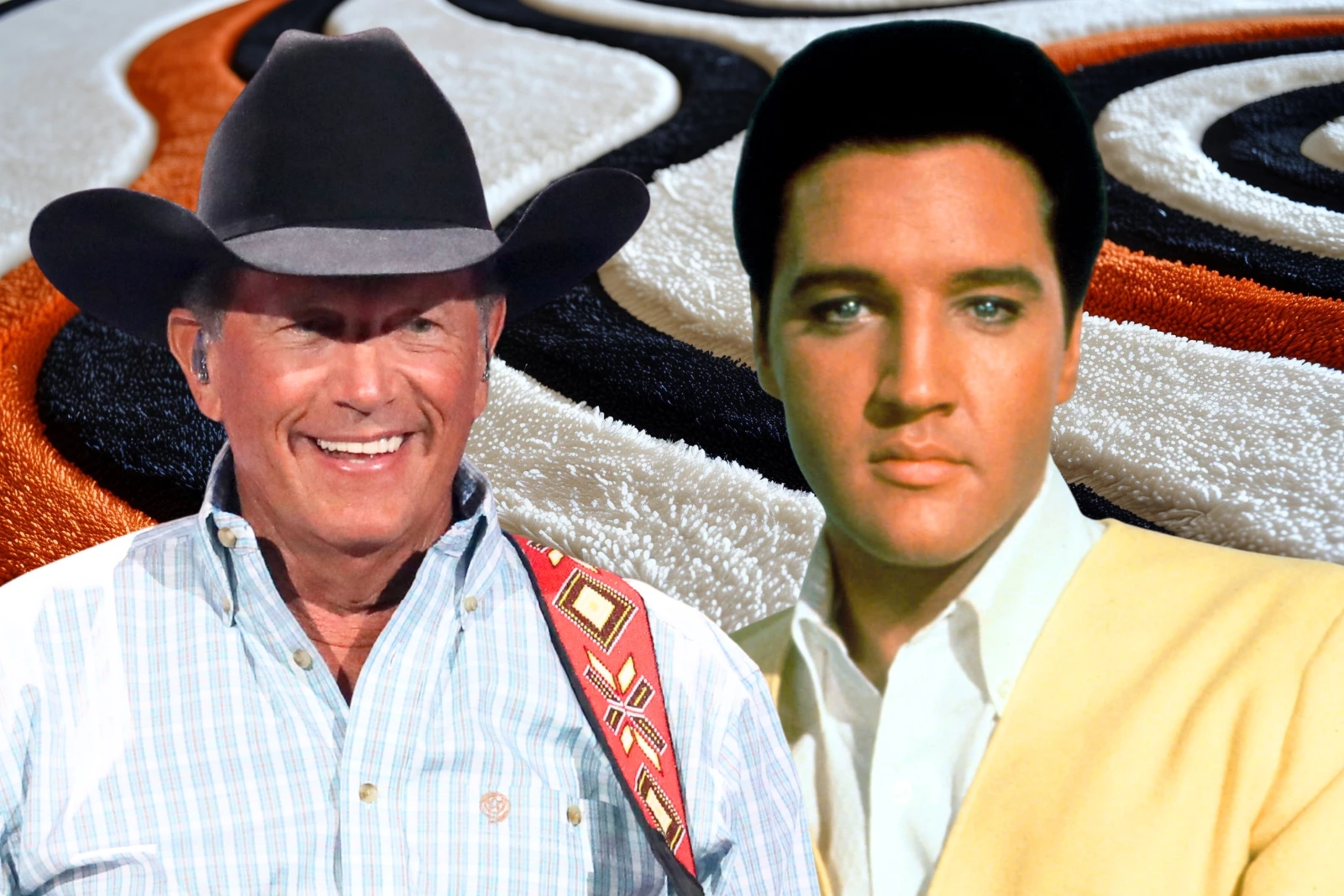
THE INCREDIBLE ELVIS PRESLEY–GEORGE STRAIT CONNECTION FEW FANS KNOW ABOUT
What if two of the biggest kings in American music had far more in common than anyone realized?
One was Elvis Presley, the undisputed cultural icon who became known as the King of Rock and Roll. The other was George Strait, the legendary country singer who became known as the King of Country. They came from different generations, built careers in different eras, and performed different styles of music. Yet when you start connecting the dots, some fascinating parallels begin to appear.
And one of the most surprising connections involves a name every Elvis fan knows: Colonel Tom Parker.
Elvis and George Strait were both deeply connected to country music, even though Elvis eventually became the defining figure of rock and roll. Elvis grew up surrounded by gospel, blues, and country influences, while Strait became one of country music’s most important traditional voices. Neither artist needed to chase every passing trend. They developed identities that were unmistakably their own.
There was another striking similarity: both served in the United States Army.
Elvis was drafted and served from 1958 to 1960, spending much of his service in Germany. George Strait later enlisted and served in the Army during the 1970s, including a period stationed in Hawaii. While their military experiences were separated by years and were obviously very different, both men eventually returned to music with an even stronger sense of discipline and professionalism.
But the story gets even more interesting when Hollywood enters the picture.
Elvis became a movie star after his music career had already exploded. Between 1956 and 1969, he appeared in dozens of films, making Hollywood an important part of his public identity. Not every movie received critical praise, but the films kept Elvis visible to millions of people and introduced his personality and music to audiences who might never have seen him perform live.
Years later, George Strait followed a surprisingly similar path.
By the early 1990s, Strait was already a major country music star. Then came Pure Country. The 1992 film gave Strait a starring role and introduced him to audiences beyond the traditional country-music world. Its soundtrack also became an enormous commercial success and remains one of the defining albums of his career.
And behind this story is another fascinating name: Jerry Weintraub.
Weintraub had extensive connections to both Hollywood and the entertainment industry, and he was involved with Pure Country as a producer while also working with major performers. His involvement adds another intriguing thread between the worlds of Elvis Presley and George Strait.
Then there is Colonel Tom Parker.
Parker’s role in Elvis’s career is one of the most discussed subjects in Presley history. He helped build Elvis into an international superstar through television appearances, recordings, touring, and strategic career decisions. His methods remain controversial among Elvis historians, but his influence on Elvis’s career is undeniable.
The claim that Parker directly “made” George Strait’s career, however, needs to be treated carefully. Parker did not manage George Strait. Strait’s longtime manager was Erv Woolsey, who played a central role in developing his career.
What makes the story fascinating is the reported connection between Parker and Strait, particularly during Strait’s Las Vegas years and around the period when Hollywood became part of his career. According to the account behind this discussion, Parker saw qualities in Strait that reminded him of Elvis and offered advice concerning the possibilities of film and entertainment.
Whether Parker’s influence was truly responsible for the success of Pure Country is much harder to establish as fact.
But there is no denying the remarkable parallel.
Elvis used Hollywood to expand his reach beyond music.
George Strait used Pure Country to expand his reach beyond country music.
Both men became cultural symbols rather than simply successful recording artists.
And perhaps that is the real connection.
Elvis became the King of Rock and Roll.
George Strait became the King of Country.
Both men built careers without constantly reinventing themselves to follow whatever happened to be popular. Elvis remained unmistakably Elvis. Strait remained unmistakably Strait—the cowboy image, the traditional country sound, the understated stage presence, and the songs that helped define modern country music.
There is even an intriguing visual similarity between their stage personas. Elvis was famous for his unmistakable walk, movements, and physical presence. Strait’s stage style was much more restrained, but his confident walk and relaxed presence became part of his identity. Whether Strait consciously studied Elvis is not something that can simply be assumed without a direct statement from Strait himself.
Still, it is easy to understand why fans see the resemblance.
Elvis influenced generations of singers.
George Strait became an influence on generations of country artists.
And both men demonstrated something increasingly rare in popular music: the ability to become enormous stars without abandoning the musical traditions that shaped them.
That’s why the Elvis Presley and George Strait connection is so fascinating.
It isn’t simply about two singers who sold millions of records. It is about two performers from different generations whose careers followed surprisingly similar paths—country roots, military service, enormous popularity, distinctive identities, and eventually an impact that reached far beyond their original musical worlds.
Maybe the biggest surprise isn’t that George Strait was connected to Elvis.
Maybe it’s that the connection was hiding in plain sight all along.
Two kings.
Two generations.
Two completely different musical worlds.
And yet, when you look closely, the paths of Elvis Presley and George Strait cross in more places than most fans ever realize.