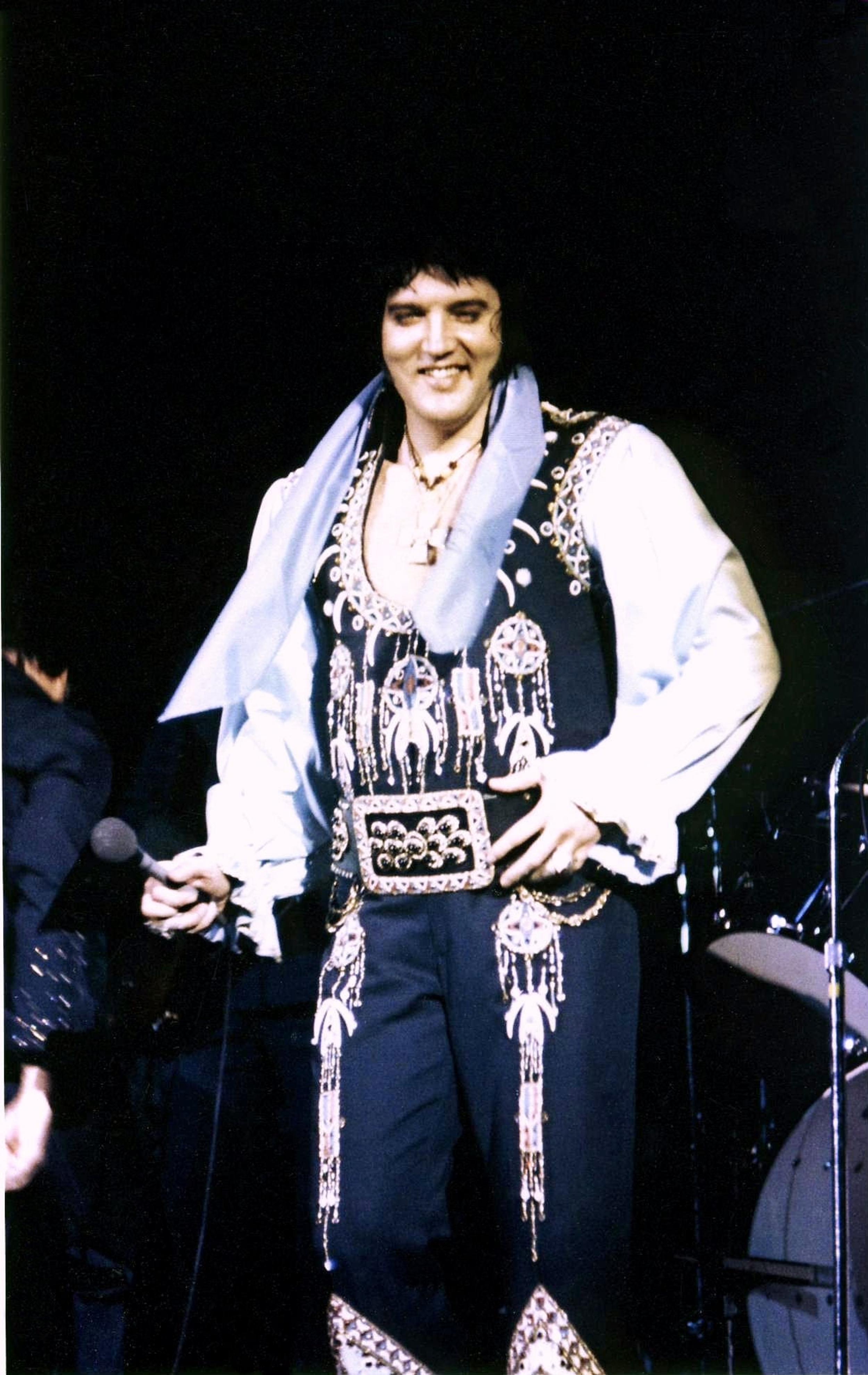
ELVIS PRESLEY DIDN’T JUST SING THAT NIGHT — HE TOOK OVER THE ENTIRE ROOM
The moment Elvis Presley stepped into the spotlight, something changed.
The crowd was already waiting for him, but within seconds, the atmosphere became something much bigger. Music filled the room, applause erupted, and Elvis launched into one of those performances that showed exactly why his presence onstage was so difficult to ignore.
Then came the familiar words:
“I got a woman across town who’s good to me.”
The audience responded immediately.
There was no need for Elvis to explain what was happening. The music, his voice, his movements, and the reaction from the crowd told the story. He had a way of turning a simple song into an event, and once he had the audience with him, he rarely let go.
But what makes this performance particularly fascinating is what happened between the songs.
Elvis stopped to speak directly to the audience.
“Thank you very much, ladies and gentlemen. Good evening. Welcome to the show.”
It sounds simple, but that was part of his magic. Elvis could move effortlessly between powerful singing and casual conversation, creating the feeling that the enormous star onstage was suddenly speaking personally to the people sitting in front of him.
The show continued with songs filled with romance, longing, and emotion. One moment Elvis was delivering a powerful musical performance; the next, he was slowing everything down and allowing the words to speak for themselves.
Then came another memorable moment.
Elvis introduced his conductor and acknowledged the orchestra, giving credit to the musicians behind the performance. The name Joe Guercio was announced, and Elvis praised the orchestra in front of the audience.
It was another glimpse of the atmosphere surrounding his live shows. Elvis was not performing alone. Behind him was an entire musical team helping create the massive sound that filled the room.
And then Elvis moved into another emotional section of the show.
He performed material from his later recordings, including “And I Love You So,” bringing a very different mood to the stage. The contrast was striking. Elvis could move from energetic rock-and-roll material to deeply sentimental songs without losing the audience.
That ability had become one of the defining characteristics of his later live performances.
Then the room changed again.
Elvis delivered “America the Beautiful.”
The patriotic song brought another emotional dimension to the performance. The audience listened as Elvis sang about spacious skies, amber waves of grain, purple mountain majesties, and America.
It was not simply another song in the set.
For many people watching, moments like this demonstrated the extraordinary range Elvis could bring to a concert. He could entertain, joke, flirt with the audience, sing romantic ballads, perform rock and roll, and then suddenly create a solemn and patriotic atmosphere.
But perhaps one of the most revealing moments came when Elvis decided to turn the attention away from himself.
“I’d like to turn the house lights up and take a look at you now that you’ve got a look at us.”
The house lights came up.
And suddenly, Elvis could see the people who had been watching him.
“There you are. Well, hello there.”
That small exchange captures something important about his stage personality. Elvis understood that a live concert was not supposed to be a one-way performance. The audience was part of the experience.
He wanted to see them.
He wanted to react to them.
And, most importantly, he wanted them to feel that they were part of the show.
As the performance continued, Elvis returned to the music, delivering more songs and acknowledging the crowd again and again.
There were cheers.
There was applause.
There were moments when the music almost seemed to disappear beneath the reaction of the audience.
And that is what made an Elvis Presley concert so powerful.
It was never just about hearing the songs exactly as they sounded on a record.
It was about watching Elvis transform those songs into something happening in real time.
His voice could become intimate.
His stage presence could become explosive.
His humor could suddenly break the tension.
And his connection with the audience could make thousands of people feel as though they were personally involved in the performance.
By the end, one thing was impossible to miss:
Elvis still knew how to command a room.
He didn’t need complicated explanations or elaborate speeches. He simply walked onto the stage, sang, talked to the audience, introduced his musicians, turned on the house lights, and allowed the crowd to become part of the moment.
That was Elvis Presley live.
A voice.
A personality.
A performer.
And, above all, an entertainer who understood that the most unforgettable concerts are not just heard.