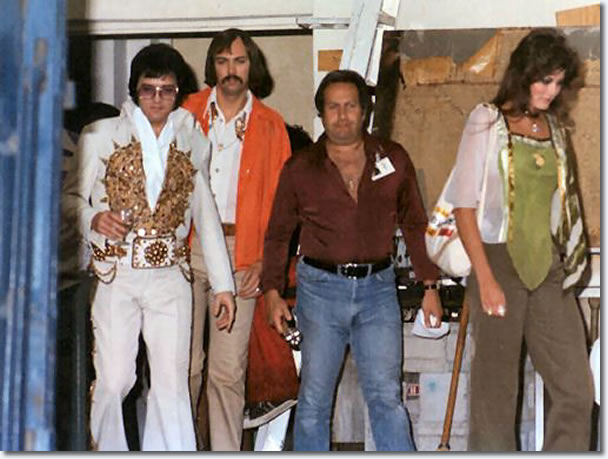
What if the hotel where Elvis Presley once stayed during his tours was now sitting empty, sealed shut, and slowly disappearing into the past?
There are places connected to Elvis Presley that still feel strangely alive decades after he left them. Some are famous landmarks. Others are ordinary buildings that became important simply because Elvis once walked through their doors. In Macon, Georgia, one of those places was a hotel located only about a mile from the Macon Coliseum — the very venue where Elvis performed during different periods of his touring career.
For Elvis fans, the story of Macon is not simply about another concert stop. It is about discovering traces of a performer who spent years traveling from city to city, hotel to hotel, leaving behind memories that would eventually become part of his enormous legacy.
The Hilton Hotel in Macon opened in 1970 and was regarded by some local residents as one of the city’s most impressive hotels. During his visits to Macon, Elvis stayed there while performing at the Coliseum. At the time, the hotel represented comfort and prestige — a place where a superstar could retreat from the thousands of people waiting outside.
But decades later, the atmosphere was dramatically different.
But there is one final chapter to the story of the hotel where Elvis once stayed.
By the end of 2024, the once-grand building had become a very different place. The hotel had been vacant since 2017, and years of neglect had left the 16-story structure badly deteriorated. When local officials inspected the building in December 2024, parts of it had standing water, including areas with several inches of water in the basement. The county had already decided that restoring the aging structure would be prohibitively expensive.
Then, on the morning of January 1, 2025, the final moment arrived.
Hundreds of people gathered around downtown Macon to watch as the former Hilton Hotel — the same building where Elvis had once stayed during his touring years — was brought down in a controlled implosion. At 9 a.m, the 16-story landmark collapsed inward, disappearing in a cloud of dust and debris.
For Elvis fans, that moment meant more than the demolition of an old building.
A place that had once welcomed one of the most famous entertainers in the world was suddenly gone.
The rooms were gone. The corridors were gone. The kitchen Elvis had once passed through to avoid the crowds was gone. The building that had quietly witnessed another chapter of Elvis’s touring life was now only a memory.
And perhaps that is what makes the old photographs so important.
Today, you cannot walk through that hotel and imagine Elvis arriving after a long journey. You cannot stand inside its corridors or look toward the entrance where fans once waited. What remains are photographs, newspaper accounts, memories, and the stories preserved by people who were there.
The hotel may have disappeared, but Elvis’s connection to Macon did not disappear with it.
He was there. He performed there. He stayed there. And decades later, even after the building itself was reduced to rubble, those moments remain part of the history of the King.
Sometimes history survives not because the building survives, but because someone remembers what happened inside it.
The hotel is gone now. But the memory of Elvis walking through its doors remains.