Elvis Presley’s Bootleg Secret: The Underground Records That Changed His Legacy Forever
For decades, Elvis Presley fans have lived with a strange contradiction.
The King of Rock and Roll left behind one of the most famous recording legacies in music history—but some of the most fascinating Elvis recordings were not originally released by an official record company at all.
They came from the underground.
Bootleg Elvis records.
And behind those mysterious vinyl albums, unofficial live recordings, alternate takes, studio outtakes, rare performances, and obscure releases lies a story that is far more complicated than simply calling them “illegal records.”
Bootlegs began appearing in the Elvis world as early as the 1970s, and from the beginning they divided collectors and fans. Some considered them unauthorized products that should never have existed. Others saw them as something completely different: a way of preserving and discovering Elvis material that official releases simply weren’t making available.
And that raises an uncomfortable question:
Without the bootleggers, would Elvis fans have ever discovered so much of the hidden Presley archive?
At a time when official releases often concentrated on commercially available masters, bootleggers were putting alternate takes, unreleased recordings, live performances, and other rare material into the hands of fans.
For collectors, these records could feel like secret windows into Elvis’s career.
Suddenly, fans weren’t just hearing the finished songs.
They could hear Elvis experimenting.
They could hear different takes.
They could hear mistakes, changes, studio conversations, alternate performances—and sometimes recordings that had never been publicly available before.
That underground demand eventually helped demonstrate something important: Elvis fans wanted more than the familiar hits.
The appetite for archival material became impossible to ignore.
And this is where the story takes an extraordinary turn.
The growth of interest in unreleased Elvis material was followed by increasingly sophisticated official archival projects. The emergence of releases devoted to outtakes, rehearsals, live recordings, and historical material gave fans access to material that once circulated primarily through unofficial channels.
The relationship between bootlegs and official Elvis releases therefore became strangely interconnected.
One could argue that bootlegs didn’t simply exist outside the official Elvis industry—they helped demonstrate the enormous demand for the material that the official industry eventually began releasing itself.
But there was another fascinating consequence.
The bootleggers started bootlegging the bootlegs.
A successful Elvis bootleg could be copied, repackaged, repressed, or reproduced with only minor changes. As technology improved, this became increasingly easy. Vinyl pressing was expensive and complicated, but the arrival of CDs and digital copying transformed the underground market.
Suddenly, duplicating an existing release was dramatically easier.
And that changed the character of Elvis bootlegging forever.
Today, collectors often encounter releases that promise “enhanced sound,” spectacular artwork, previously unheard material, or a rare concert—but sometimes the supposed discovery is simply another presentation of recordings fans have already heard.
The era of genuine discovery became harder to reproduce.
Yet the original vinyl bootlegs of the 1970s and 1980s remain fascinating historical artifacts.
Some were crude.
Some were beautifully produced.
Some contained remarkable recordings.
Others were almost impossible to distinguish from official products.
And that is where serious collectors face another mystery:
How do you know which copy you actually own?
Different pressings could have different labels, colors, matrix numbers, artwork, countries of manufacture, and even counterfeit versions of earlier bootlegs. A record that appears to be an original pressing may turn out to be a later reproduction.
For Elvis vinyl collectors, identifying these variations can become an obsession.
One fascinating example is Please Release Me, regarded by collectors as the first Elvis bootleg album, issued in Holland in 1970. Its historical importance goes far beyond the music itself. It represents the moment when Elvis’s unofficial recording world truly began taking shape.
Then there were releases such as The Legend Lives On, From the Beach to the Bayou, The Jail House Rock Sessions, Lost on Tour, Stacks Tracks, and Yesterday Today.
Each one tells part of the story.
Some featured rare live performances. Others contained studio material, alternate versions, or recordings that official channels had not yet made available.
And then there was the artwork.
Some bootleg covers were surprisingly creative—sometimes so spectacular that collectors valued the physical record almost as much as the music inside.
This entire underground culture has now become important enough to deserve its own history.
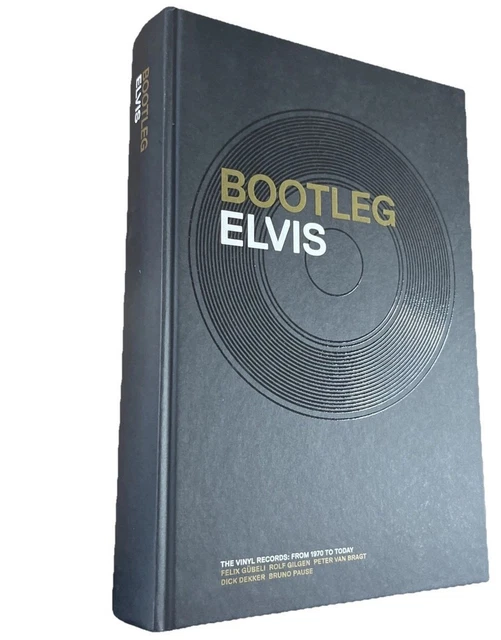
Books such as Bootleg Elvis have become prized reference works among collectors, documenting releases, pressings, labels, counterfeit editions, sound quality, artwork, and the strange evolution of Elvis’s underground recording market.
The scarcity of some of these books has itself created another collector’s market.
And perhaps that is the most fascinating part of the entire story.
What began as unauthorized Elvis recordings eventually became a form of music history.
These records document not only Elvis Presley—but also what Elvis fans wanted to hear, what record companies chose not to release, and how collectors preserved material that might otherwise have remained hidden.
The question is no longer simply:
“Are bootlegs good or bad?”
The more interesting question is:
“What would the history of Elvis Presley collecting look like if bootlegs had never existed?”
We may never know the answer.
But one thing is undeniable: for generations of Elvis fans, these mysterious records created a parallel Presley universe—one filled with rare performances, alternate takes, strange pressings, counterfeit labels, beautiful artwork, and recordings that seemed to come from somewhere outside the official Elvis story.
And once you enter that world, getting back out isn’t easy.
Because behind every old Elvis bootleg could be another story.
Another recording.
Another pressing.
Another mystery.
And perhaps another piece of The King that fans thought they would never hear.