Elvis Presley Almost Never Sang This Song Live — Then It Suddenly Returned Near the End
What if one song could reveal a hidden side of Elvis Presley’s final years?
In 1962, “Return to Sender” became one of Elvis Presley’s most recognizable hits. It climbed the charts, became a favorite among fans, and remained closely associated with the sound of his early-1960s career.
But there was something strange about the song.
For more than a decade, Elvis almost completely left it behind on the concert stage.
Throughout much of the 1970s, while Elvis was performing hundreds of shows around the country, “Return to Sender” was rarely heard live. And then, unexpectedly, the song began appearing again during the later years of his career.
Three performances in particular stand out: Asheville in 1975, Lake Tahoe in 1976, and Hampton Roads in 1976.
Taken together, these performances offer something more than rare versions of an old hit. They provide three very different snapshots of Elvis Presley as a live performer during the final chapter of his career.
The first remarkable moment came in Asheville, North Carolina, in 1975.
The concert had an unusual atmosphere. Fans were given opportunities to request songs, creating a set list that was far less predictable than a standard Elvis show. Instead of simply moving through the familiar numbers expected from him, Elvis responded to requests and reached back into songs that had rarely, if ever, appeared in his later concerts.
Among them was “Return to Sender.”
For fans who knew the song from its 1962 success, hearing Elvis perform it live more than a decade later was an extraordinary moment.
He also performed other unusual selections, creating a concert that felt different from the carefully established routine of many of his later shows.
And then came another unforgettable surprise.
During the concert, Elvis gave away his famous black Gibson Dove guitar to a fan. Moments like this were part of the unpredictable atmosphere surrounding some of his later performances. Elvis could suddenly turn a concert into something deeply personal, interacting with people in the audience and giving them memories they would never forget.
Then came May 1976 and Lake Tahoe.
By this point, Elvis was no longer the young performer who had shocked the world in the 1950s. Yet on this particular night, the atmosphere was remarkably relaxed.
The performance became known for its unusually long running time and its extensive interaction with the audience. Elvis took his time, talked between songs, responded to requests, and allowed the evening to develop its own rhythm.
And once again, “Return to Sender” appeared.
That alone made the performance significant.
The song had spent most of the 1970s absent from Elvis’s concert repertoire, yet here it was again, performed more than fourteen years after its original hit-making era.
Compared with the earlier performance, the Lake Tahoe version has a different character. It feels less like a recreation of the 1962 Elvis and more like a glimpse of the mature performer he had become.
Then came August 1, 1976, in Hampton Roads, Virginia.
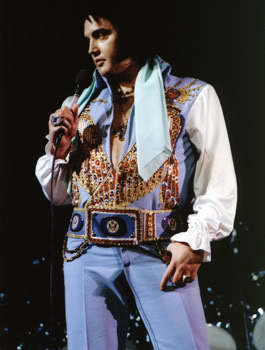
The venue was packed, with thousands of fans waiting to see Elvis on stage. He appeared in one of his elaborate jumpsuits, and somewhere in the middle of the show came another rare appearance of “Return to Sender.”
But this performance carries a very different emotional weight.
By 1976, Elvis was visibly dealing with the physical pressures of his demanding touring schedule. His voice and energy could vary dramatically from one night to another. Recordings from this period reveal both the power that remained in his voice and the difficulties he sometimes faced during performances.
That contrast is what makes the Hampton Roads version so fascinating.
This wasn’t the Elvis of 1962, standing at the height of his early pop success.
This was Elvis in the final stage of his career, returning to a song that had once belonged to another era of his life.
And that may be the most intriguing part of the story.
“Return to Sender” wasn’t simply an old hit brought back for nostalgia. Each time Elvis performed it during these later years, the song existed in a completely different context.
In 1975, it appeared as part of an unusually unpredictable concert filled with requests.
In 1976, at Lake Tahoe, it became part of a long and relaxed evening in which Elvis allowed himself more freedom with the audience.
And later that year at Hampton Roads, it became one of those rare moments when a song from his past resurfaced during a much more complicated period of his career.
Three performances.
One song.
Three very different glimpses of Elvis Presley.
And perhaps that is why these recordings remain so fascinating to collectors and fans today. They remind us that Elvis’s concert career wasn’t simply a straight line from his greatest hits to his final performances. Even during the later years, there were unexpected choices, forgotten songs, audience requests, spontaneous moments, and flashes of the performer who had once changed popular music forever.
“Return to Sender” had already become history in the 1960s.
But Elvis wasn’t finished with it.
More than a decade later, he brought it back to the stage—briefly, unexpectedly, and only a handful of times.
And when you listen to those recordings today, you’re not just hearing an old Elvis Presley hit.
You’re hearing a song from one era collide with the final chapter of another.
That is what makes these performances so special.
Because sometimes, the songs Elvis sang only a few times tell us just as much about his later years as the songs he performed night after night.