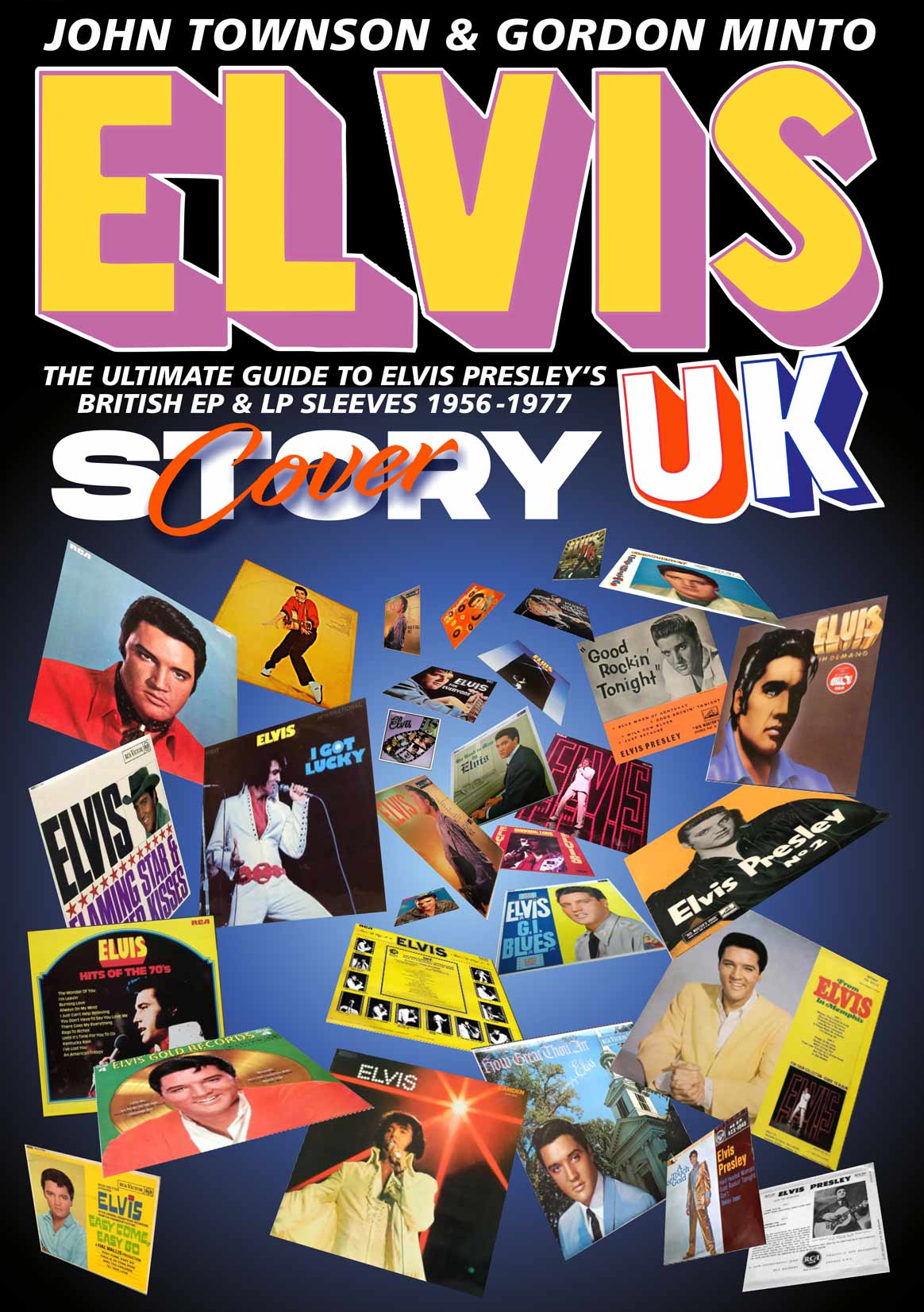
THE ELVIS BOOK THAT COULD CHANGE THE WAY YOU LOOK AT HIS ALBUM COVERS
For decades, Elvis Presley’s records have been collected, displayed, admired—and sometimes studied almost like pieces of art. But what if the real stories were hiding in the smallest details on the sleeves? A new physical edition of Elvis Cover Story promises to take fans far deeper into the world of Elvis album artwork than a simple collection of cover photographs ever could.
At first glance, an Elvis record cover may seem straightforward. There is Elvis, a photograph, a title, a record label, perhaps a few lines of text. But for serious collectors, that surface can hide an extraordinary amount of history.
Different countries used different photographs. Images were cropped, reversed, replaced, or reused. Back covers could contain photographs that appeared nowhere else. Original price stickers, promotional artwork, variations in typography, and regional designs could all reveal something about how Elvis Presley was marketed around the world.
And that is exactly where Elvis Cover Story becomes fascinating.
The book, produced by Gordon Minto and John Towns0n as part of the Elvis UK publishing project, is designed as a detailed companion to the earlier Elvis Compact volumes. Rather than simply telling Elvis’ life story, it turns the spotlight toward something collectors often obsess over: the records themselves and the artwork surrounding them.
The physical edition is particularly significant because the title had previously been available digitally. The new printed version gives collectors something they can actually hold, examine, and return to whenever they discover another unusual Elvis sleeve.
And this is where things get surprisingly deep.
The book reportedly runs to 286 pages, covering much more than the obvious front covers. It explores back-cover photographs, EPs, LPs, UK-specific designs, unusual artwork variations, and even details such as original pricing stickers and promotional elements.
For a casual fan, a tiny sticker on an old record might mean almost nothing.
For an Elvis collector, it can be a piece of history.
One of the most intriguing aspects is the attention given to UK-specific cover designs. Elvis’ records were released in different markets, and the British versions could feature artwork or alterations that differed from American releases. Sometimes the differences are obvious. Other times, they are hidden in cropping, photographic choices, layouts, or small details that are easy to overlook.
That means the same Elvis album could effectively tell a different visual story depending on where it was purchased.
The book also appears to dig into photographs that were reused or altered for other purposes. A photograph might have been cropped dramatically, reversed, or repurposed for a different release. Once you know what to look for, an apparently familiar Elvis image can suddenly become something completely different.
And that is perhaps the most exciting promise of Elvis Cover Story.
It encourages fans to stop looking at Elvis record sleeves as decoration—and start looking at them as evidence.
Evidence of changing marketing strategies.
Evidence of different international releases.
Evidence of photographic choices.
Evidence of how Elvis’ image evolved across different periods of his career.
Even the seemingly insignificant details can become fascinating. Original label pricing, promotional references, unusual back-cover photographs, and regional variations all help reconstruct the world in which these records were originally sold.
For collectors, that level of detail can be addictive.
You might think you already know a particular Elvis album. You may have owned it for decades. You may have seen the cover hundreds of times.
Then one small detail changes everything.
Perhaps the photograph was actually taken earlier than you thought. Perhaps another country used a different crop. Perhaps the image was reversed. Perhaps the British release contained a completely different visual element. Suddenly, the record sitting on your shelf becomes a much more interesting historical object.
The book also works particularly well as a companion to the Elvis Compact series. Rather than simply repeating Elvis’ biography, it approaches his legacy from another direction, concentrating on the physical objects that helped build his worldwide image.
And there is another reason this release has caught the attention of collectors: the physical edition represents a shift away from the digital version.
According to the video transcript, once physical ordering becomes available, the digital editions were expected to be discontinued, making the printed version especially relevant for fans who want a permanent reference copy.
For Elvis collectors, that matters.
Digital material is convenient. But there is something different about opening a large-format book, studying a rare sleeve photograph, comparing two versions of the same release, and turning the pages while sitting beside a collection of original Elvis records.
That experience is part of the hobby.
And perhaps that is why Elvis Cover Story feels more important than its title initially suggests.
This isn’t simply another book showing pictures of Elvis.
It is a closer look at the visual history surrounding one of the most extensively documented recording careers in popular music.
The shocking part isn’t that Elvis had hundreds of record covers.
The shocking part is how much information can still be hidden inside them.
A tiny change in a photograph. A different crop. A reversed image. A UK-only design. An original sticker. A forgotten promotional detail.
To someone unfamiliar with record collecting, those things may look insignificant.
To an Elvis historian or serious collector, they can become clues.
And after seeing what this book is attempting to document, you may never look at an Elvis album cover quite the same way again.
The King may have left behind one of the most recognizable images in music history—but behind that familiar face is an enormous visual archive still waiting to be examined.
And Elvis Cover Story appears determined to open that archive, one record sleeve at a time.